

☕ Welcome to The Biotech Tea, ! I have a goal of expanding my corner of the internet to 1000 in just a few weeks so if you find this a helpful resource, hit the subscribe button. You’ll get a quick weekly summary every Thursday morning!
Let’s get into this week’s cup of biotech tea. ☕ If you only have time for one this week, I’d start with #1!
Poor ethics and even worse accountability in a gene editing experiment ➡️
‘Doggybone DNA’ vaccine used in first lung cancer patient ➡️
J&J gets De Novo approval for a soft-tissue surgery robot — OTTAVA ➡️
Online prediction markets enter the drug trial and approval space ➡️
NSF introduces new industry-academic PhD pilot program ➡️
Bonus (paid): De Novo Authorization ➡️
1. Story I’m Watching
The Tea: The awful outcome of an extremely poor bioethics decision in gene editing is making the rounds in the media the last few weeks. A six-year-old girl from China, named Mei, died from an experimental gene editing therapy for a minor developmental delay caused by Snijders Blok-Campeau syndrome.

A single base pair mutation in the CHD3 gene was the disease culprit and a neuroscientist, Dr. Zilong Qiu, felt confident he could fix the mutation with an AAV-delivered base editor. To make a long story short, he and his research team failed to clearly explain the risks seen in the non-human primate studies. The severe kidney and liver damage seen in the monkey’s were downplayed to Mei’s parents when they signed her up for the treatment. Within days, Mei reacted poorly to the therapy and had died of suspected immune reaction. To make the story worse, the researchers went on to publish their research without mentioning her death. Her story is just going public after her parents decided the story was important to tell.
A few more sips: For timeline context this was all happening around the same time as the miracle story of ‘Baby KJ’ being successfully treated for his rare metabolic disorder with personalized CRISPR gene editing.
We covered Baby KJ and some of the most recent gene editing publications by the research group at Children’s Hospital of Philadelphia in Issue #5!

2. From the Bench
The Tea: In the UK, a patient received the first of it’s kind ‘doggybone DNA vaccine’ — NEOVACC — for personalized treatment of her PD-L1 non-small cell lung cancer. The DNA-based vaccine is made to target patient-specific neoantigens (tumor antigens that are not native to the patients healthy cells) and be combined with a more standard immunotherapy, like Keytruda.
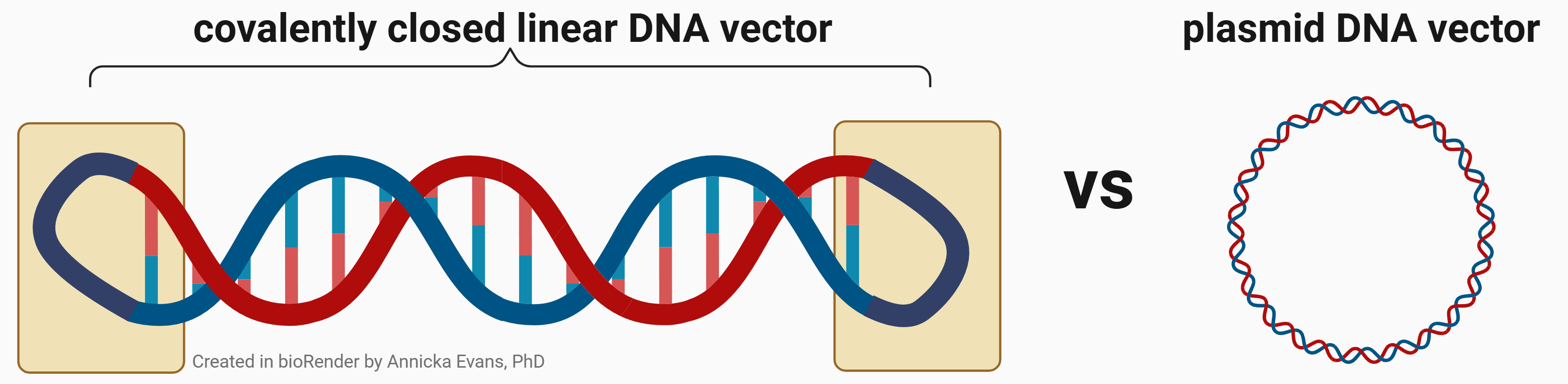
The doggybone DNA (dbDNA) technology is developed by Touchlight. It is a cell-free production process that forms covalently closed linear DNA vectors that they claim are still high performing in cells, much faster to produce than plasmid DNA in bacteria, and more pure. It uses a polymerase and protelomerase duo to amplify and then transform the template DNA (which encodes for the neoantigens) into the dbDNA morphology. DNA production timelines can be a serious bottleneck in manufacturing and Touchlight aims to address that.
A few more sips: NEOVACC is delivered intramuscularly via a needle-free jet injector! The PharmaJet Stratis device uses spring-loaded pressurization and a microscopic tip to force the liquid drug formulation through the surface of the skin into the muscle.

A special thanks to a reader (and good friend) for sending me the article on this one!
3. Bio[Tech]
The Tea: Johnson & Johnson has just received FDA De Novo authorization for it’s new soft-tissue robotic surgical system known as OTTAVA. It’s indicated for use in a handful of procedures including gastric bypass, splenectomy, small bowel resection, and appendectomy, just to name a few. De Novo authorization indicates that it was different enough from it’s (well known) predecessor — Intuitive Surgical’s da Vinci robot — to warrant a new “category”.
So what are the stand-out features of OTTAVA? Probably most notably is that the 4 robotic arms are not carted into the OR next to the patient (as da Vinci is) but they are actually integrated into the surgical table! The table itself is also able to move in tandem with the arms to help ensure patient-robot positioning is optimal (they call this twin motion).

4. The Rulebook
The Tea: You may have heard of the online prediction markets Kalshi or Polymarket. They let you bet on almost anything in real-time — sports, elections, weather, politics, etc. Well now it’s expanding to include bets on drug trials and regulatory approvals, which is causing quite the stir.

You have to ask yourself what kinds of decisions a researcher, physician, or patient may make if monitoring betting results of clinical trial.
“Turning loose a betting market in an ongoing randomized clinical trial really is a breach of scientific conduct.” - Dr. Robert Califf, former FDA commissioner
But Kalshi argues that odds for the success of a new therapy is one of the most valuable numbers in the economy and that improving visibility can only be beneficial, even if disruptive in the short-term.
I’m curious for those of you who work in biotech or pharma:
5. The Human Side
The Tea: The NSF just announced a new $47 million pilot program aimed at funding 250 PhDs that combine both academic and industry experience. The Industry-Integrated PhD (I-PhD) Scholars Program aims to graduate selected students from their university graduate program in just 4 years, with heavily industry-informed dissertation work. The first year will be funded by the university, while years 2 through 4 will be funded by NSF and the industry partner. Companies are required to contribute at least $100k per student which definitely shifts the model of how graduate research is funded.

Biotech Term of the Week
Paid Subscriber Bonus Content
De Novo Authorization
I really enjoyed this issue! The bioethics discussion in particular was eye-opening. The contrast between the gene-editing case and Baby KJ especially interests me. Lots of great topics here for anyone working at the intersection of research, biotech, and patient impact.
Amazing news about the new vaccine (the second point), and what a coincidence - I have been working at Touchlight on dbDNA and other cool technologies for last decade!