🗣️ Stay tuned! I’m attending the Bioprocessing Summit this week, so next week’s issue will be a special conference-themed edition. Same structure, but sections pulled from talks I attended!
Let’s get into this week’s cup of biotech tea. ☕ If you only have time for one this week, I’d start with #2!
The FDA has approved Moderna’s 4th mRNA-based vaccine, this time for Flu! ➡️
Fungi help discover a new immunosuppressant for organ transplantation ➡️
To keep up with the scale of the Cyclospora outbreak, Roche adds tests ➡️
Dr. Erica Schwartz has been confirmed our new CDC Director ➡️
A reflection piece as we hit one year since the shooting at CDC headquarters ➡️
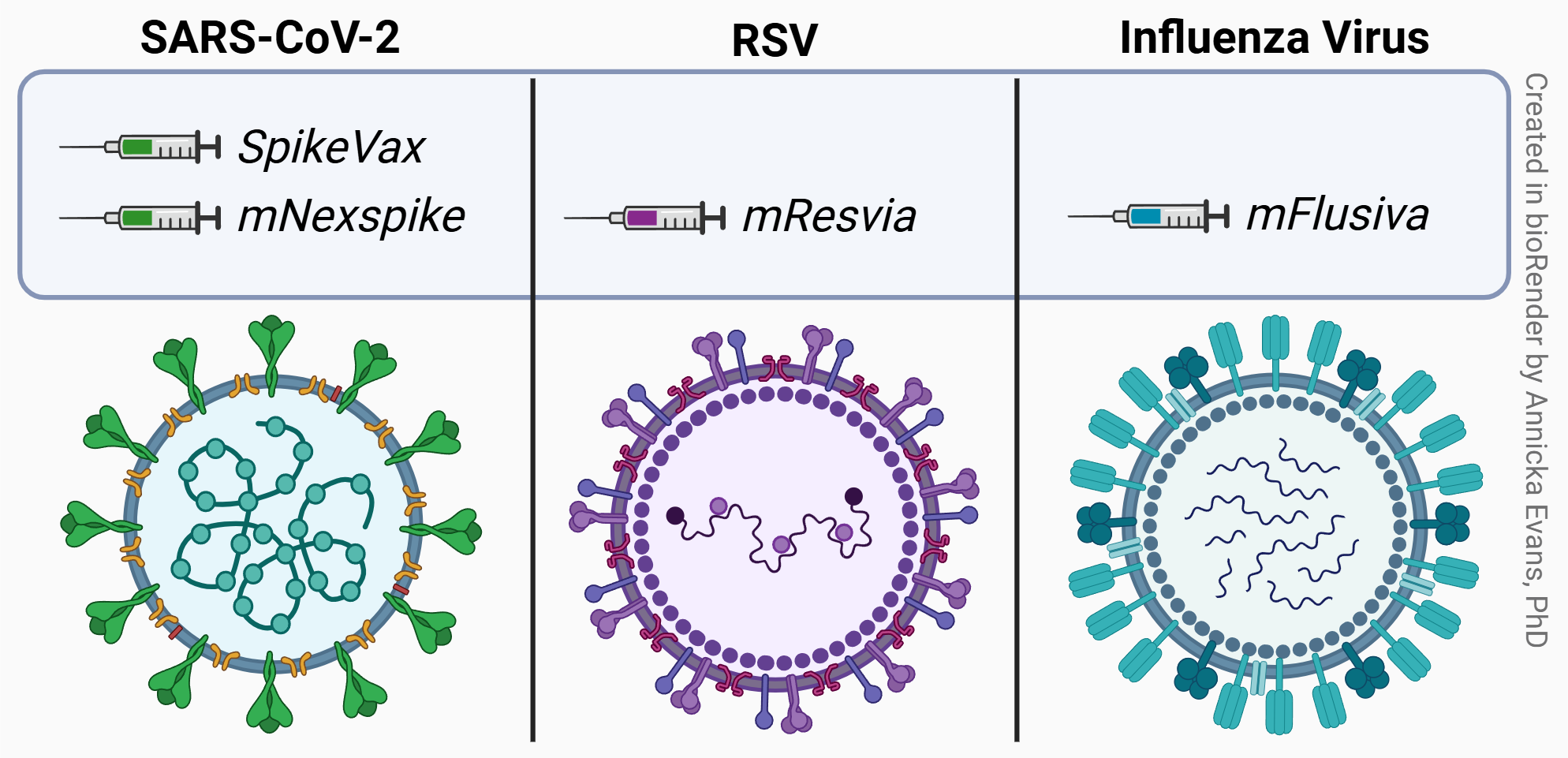
The Tea: A few weeks back we covered the FDA advisory committee recommending Moderna’s mRNA-based flu vaccine in 50+, but we were still waiting on the FDA’s decision. Well just last week the FDA announced its approval of the product! It’s Moderna’s 4th FDA approved product.
As of right now, there has been very little talk about availability timelines. Normally the upcoming flu vaccine is rolled out early August, so I would anticipate seeing it available in the coming weeks.
A few more sips: As a reminder, mFlusiva is an mRNA-based vaccine similar to that of the Moderna and Pfizer COVID-19 vaccines. A lipid nanoparticle encapsulates three mRNAs that each encode for the hemagglutinin (HA) glycoproteins of influenza A-H1N1, A-H3N2, and B-Victoria. The Phase 3 trial data was published in NEJM earlier this year and showed that the the mRNA-based vaccine reduced the risk of influenza-like illness by 26.6% relative to the standard-dose vaccine it was compared to! This bump in efficacy combined with the added technology benefit of quicker seasonal pivots, may be a game changer for protecting against seasonal strains.
The Tea: LifeMine Therapeutics, a Cambridge Massachusetts biotech company that centers around what we can learn from Fungi, just raised $263M to accelerate their novel calcineurin activation inhibitor — LIFE-001.
They have a unique top-down approach to designing medicines that centers on learning from the evolution of fungal genomes! They have built out the largest collection of deep-sequenced fungi species that helps them digitally search for genetically encoded small molecules (GEMs) that could be new human drug candidates. That works because fungi are relatively close to humans evolutionarily!
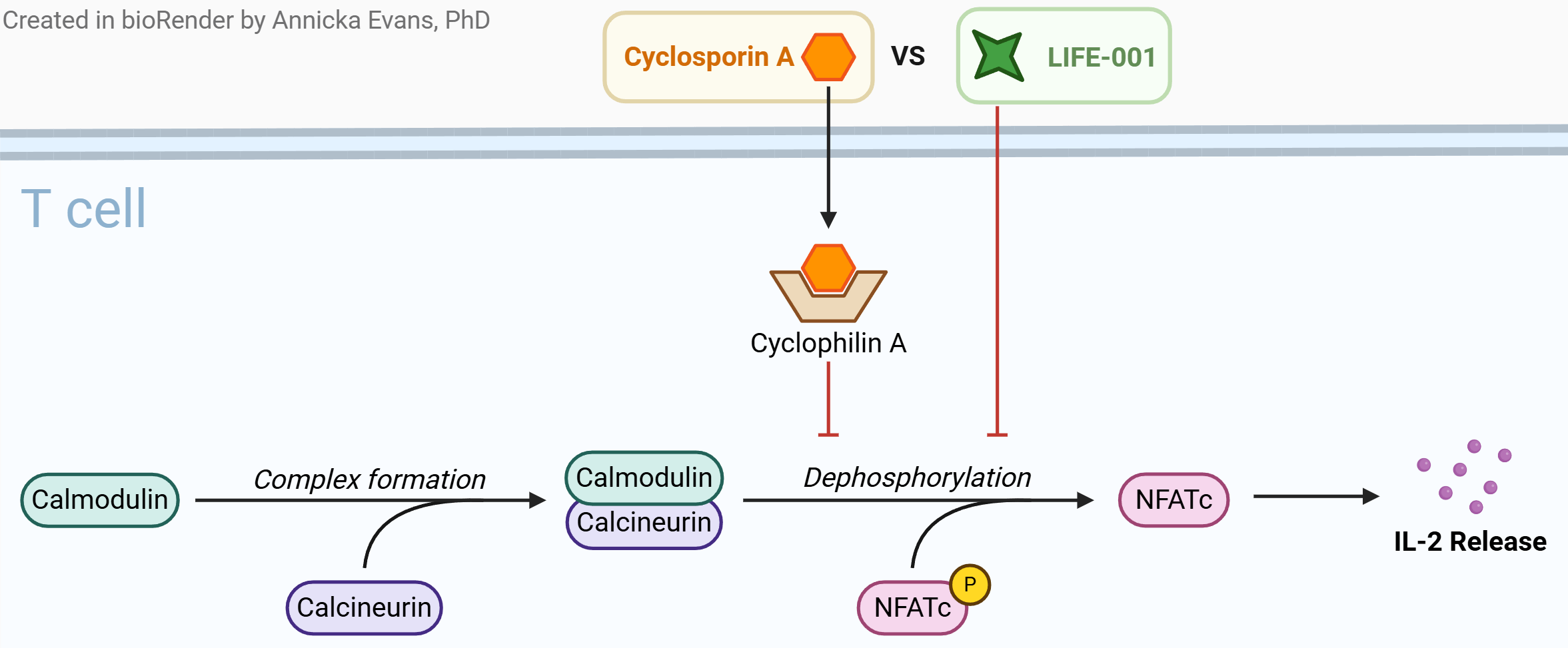
Calcineurin activation inhibitors (CNais) are a type of immunosuppressants and work by blocking cytokine production (via NFAT dephosphorylation) stopping the activation of T-cells. This class of drug is largely used in organ transplants to avoid rejection, but also for things like psoriasis, arthritis, etc. LIFE-001 is recruiting for a Phase 1 kidney transplant and islet cell transplant study that aims to begin next year.
A few more sips: LifeMine’s CNai is unique from those already on the market (like Cyclosporin A) because it directly targets and binds calcineurin as opposed to targeting intermediary pathway proteins (like cyclophilin A).
Message me if you have a recent science development you’d like to see featured!
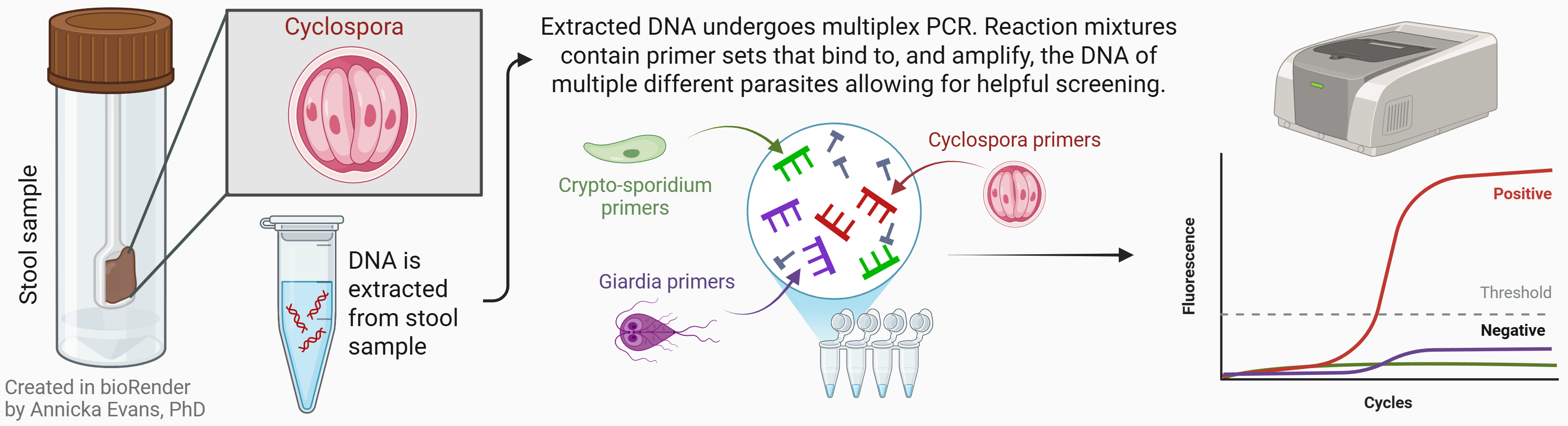
As a reminder, molecular-based gastrointestinal (GI) screening tests are very sensitive and have the ability to detect multiple targets at once. Hospitals that receive patient stool samples either send them out to a certified lab for the test to be run, or run them in-house if they’ve adopted the technology. There are a handful of approved PCR tests that detect the presence of select bacteria, viruses, or parasites that could be the culprit when a patient comes in with GI symptoms.
The two qPCR Roche tests are designed for research use only (RUO). Despite this, adding new options to keep up with the surge is helpful.
LightMix Modular Cyclospora (detects only Cyclospora)
LightMix OneTube Gastro Para 2 (panel including Cyclospora)
A few more sips: Last month we covered other FDA approved and LDT Cyclospora diagnostic tests.
The Tea: Dr. Erica Schwartz has officially been confirmed CDC Director. It’s been fascinating to watch the peaks and troughs of her support ever since the President announced her nomination in April. Largely in line with party counts, she confirmed in the Senate with a vote of 51-44. Senator Cassidy, a career physician, is one Republican Senator who initially indicated he may not support Schwartz, but in the days leading up to the confirmation, changed his position.
As a reminder, she has three degrees (a BS in Biomedical Engineering, an MS in Public Health, and an MD) and decades of relevant professional experience. She once served as Deputy Surgeon General and held several positions within the U.S. Coast Guard, including Chief Medical Officer and Chief of Preventative Medicine. Since her nomination she has been unclear on her alignment with Secretary Kennedy, making her more appealing to some, and less to others.
The Tea: It was just over a year ago that bullets were shot at windows of the CDC headquarters in Atlanta. In this personal reflection piece, Daniel Jernigan (former director of the National Center for Emerging and Zoonotic Infectious Diseases) describes that scary day and how it’s felt since.
“Public health workers protect everyone from outbreaks. Now the same people need protection.”
Biotech Term of the Week
Paid Subscriber Bonus Content
Restricted Stock Unit
This post has bonus content for paid subscribers. Upgrade to get full access.