

💸Quick resource: A few people asked about expensing The Biotech Tea through work, so I put together a short email template you can send to your manager.
Let’s get into this week’s cup of biotech tea. ☕ If you only have time for one this week, I’d start with #2!
The frontrunner oral GLP-1 agonists are entering new indications ➡️
A hole poked in the central dogma of biology ➡️
OpenAI released a life-science reasoning model, GPT-Rosalind ➡️
Erica Schwartz appointed the new CDC Director ➡️
A pediatrician pushes back on vaccine skepticism as the majority opinion ➡️
Bonus (paid): Biologics License Application (BLA) ➡️
1. Story I’m Watching
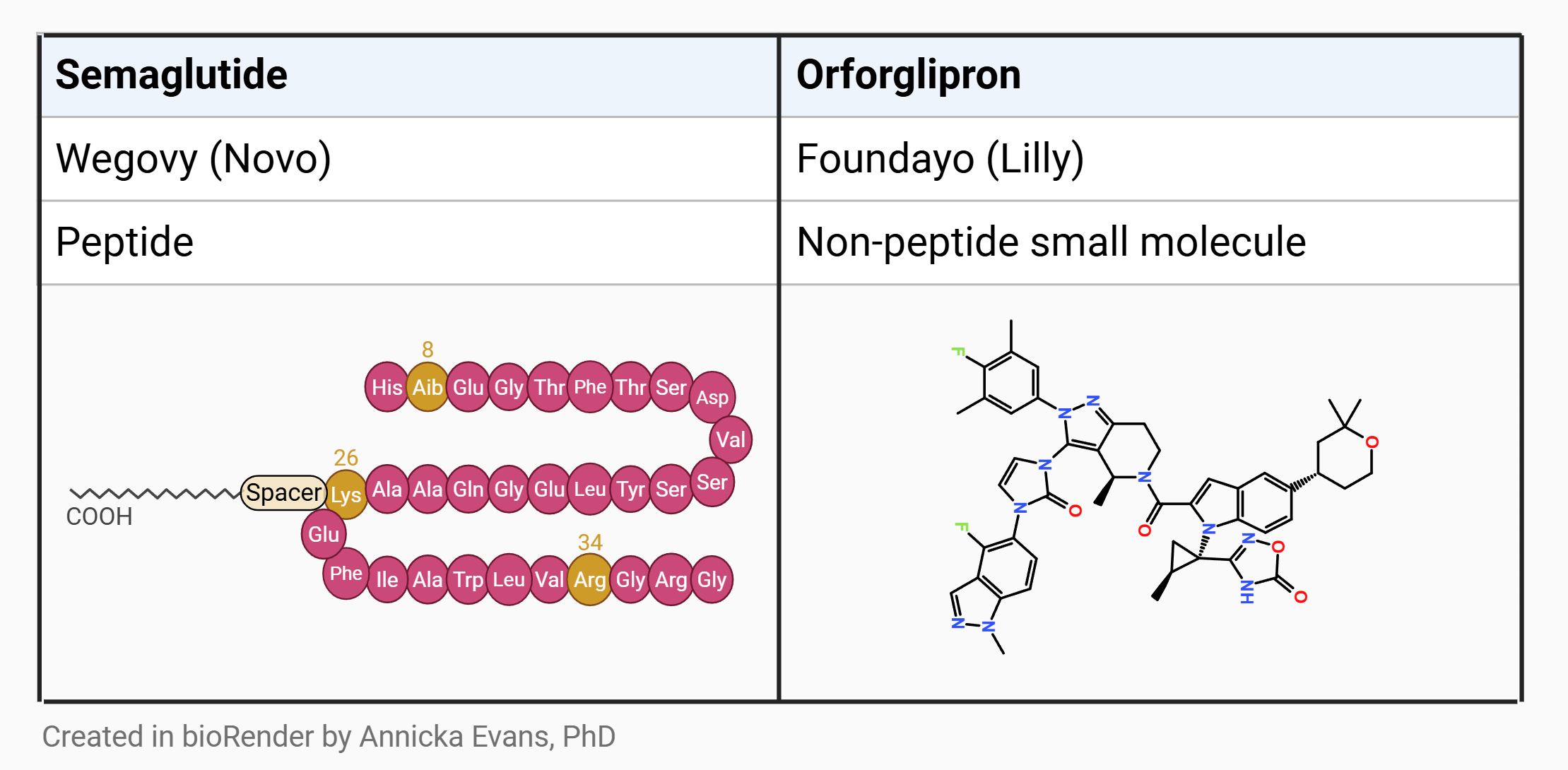
The Tea: As of a few weeks ago there are now two oral GLP-1 agonists on the market for weight-loss: semaglutide (Wegovy with Novo Nordisk) and orforglipron (Foundayo with Eli Lilly). But, as we know, these drugs aren’t just for weight-loss. The race to be approved for other indications is underway. Wegovy was approved for both weight-loss and reducing cardiovascular (CV) risk in December 2025. This week, Phase 3 trial results for Foundayo demonstrated it may have potential for diabetes treatment in addition to weight-loss.
A few more sips: In the trial (ACHIEVE-4), participants with obesity and type 2 diabetes were split into an arm taking Foundayo and an arm taking Insulin. Lilly reports that there was no increase in major adverse CV events but that A1C and body weight showed greater improvement in the Foundayo group. This is significant, when being compared to Insulin!
Fun fact: While the GLP-1 agonist landscape is largely peptides, Foundayo is unique in that it is a small molecule drug. If you hear that it may be more tolerable and can be taken without food or water… this is why!
2. From the Bench
The Tea: Researchers at Stanford recently published data that demonstrates an exception to the central dogma of molecular biology. They found a protein that is able to make a DNA sequence without having an RNA template! The central dogma dictates that DNA makes RNA makes Protein and that it is a unidirectional flow of information (meaning protein can’t be the template for DNA or RNA). Dr. Alex Gao, and team, discovered that a reverse transcriptase enzyme that functions to defend bacteria against phages does in fact make DNA by itself (a reversal of the established idea of information flow). Known as Drt3b, it is able to use its peptide sequence to specifically recruit nucleic acids in the sequence of ACACAC (polyAC) to create a single stranded DNA (ssDNA)!
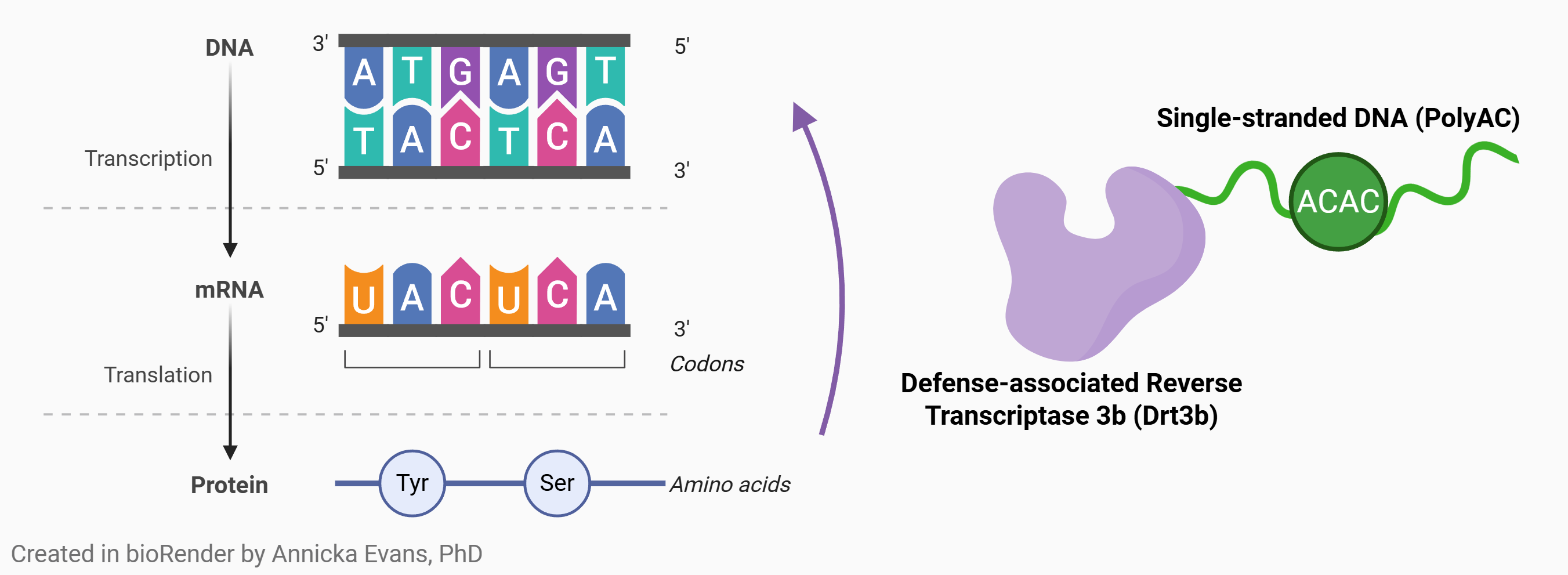
A few more sips: This discovery opens a lot of doors. Prior to now, science understood that nucleic acid chemistry was required for building new nucleic acid strands. Specifically, tRNAs bring in nucleic acids based on the template codons. This discovery suggests that the shape and geometry of a protein active site is enough to recruit nucleic acids in a patterned order. The sequence here is rudimentary (a two-base pair repeat sequence) so I think it’s unlikely that we will find a protein that is able to create a long, sequence-complex peptide without a template. But time will tell!
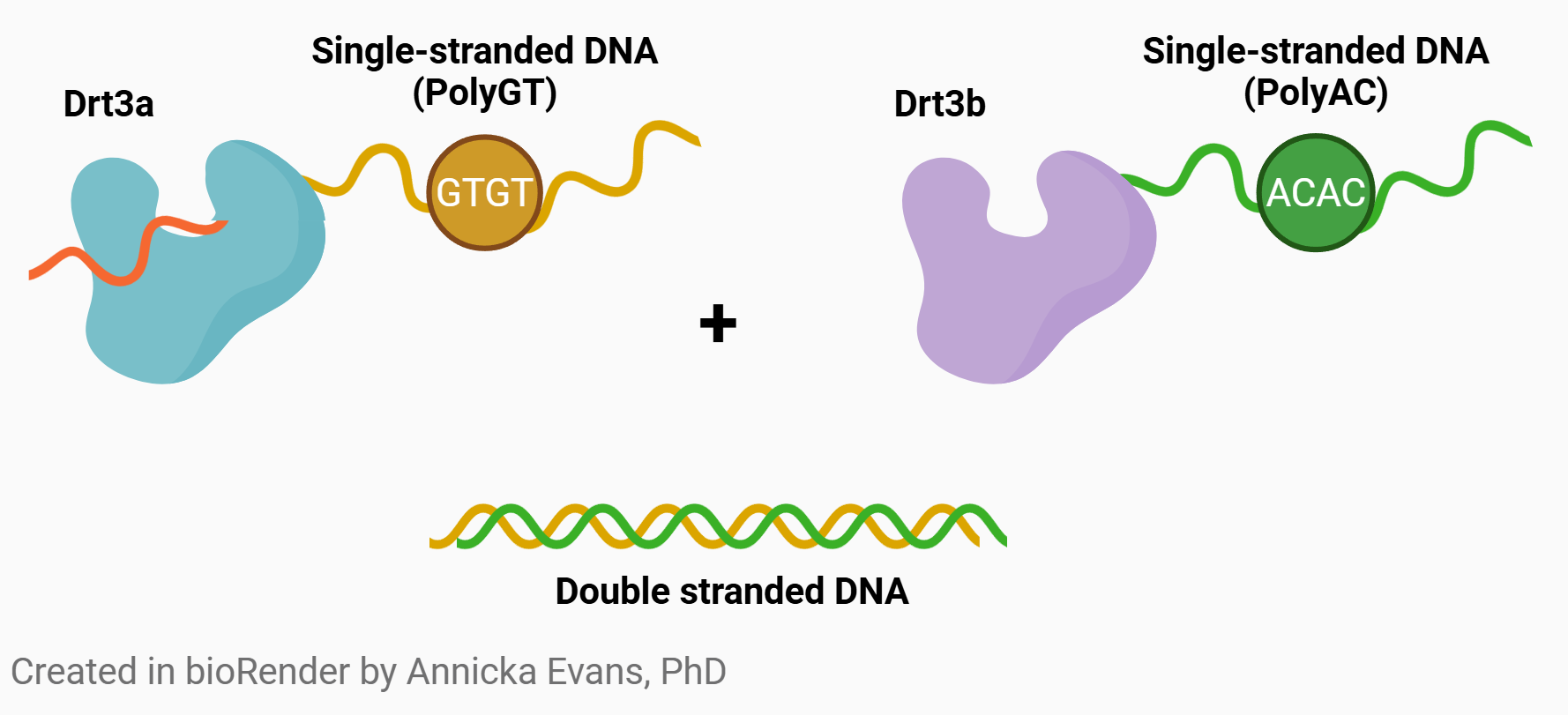
For those interested in a little more detail about the Drt system in the paper. Drt3a does use an RNA template to make a polyGT ssDNA. It is Drt3b that makes the complementary polyAC ssDNA with no template at all. The two ssDNA sequences combine to form a double-stranded DNA (dsDNA) sequence.
Message me if you have a recent science development you’d like to see featured!
3. Bio[Tech]
The Tea: OpenAI just rolled out a reasoning model built for life science research, GPT-Rosalind, named after Rosalind Franklin. The model specifically aims to reduce the time between discovering a drug and treating patients, with tools designed for early research, trial design, regulatory document drafting, manufacturing optimization, and commercial launch and lifecycle management strategy. Rosalind is already being used by biotech companies like ThermoFisher, Amgen, Moderna, & Sanofi. Companies who are interested can request access and OpenAI will access eligibility and governance to make sure it is being used in a safe and controlled way.
A few more sips: On their website they show a few examples of science/research prompts they tested in Rosalind as well as their broad scope models GPT5, 5.2, and 5.4. Rosalind consistently scored higher. Check out this page if you are interested in seeing the prompts and some of the comparative responses.

🗳️ P.S. My survey results showed a potential interest in Bio[Tech] placing higher up in the newsletter. I’d like to get a larger feel for this here! Let me know!
4. The Rulebook
The Tea: President Trump has nominated Erica Schwartz to lead the CDC, and she will take the role if confirmed by the Senate. When I first started looking into Dr. Schwartz it seems clear she is qualified for this position. She has three degrees (a BS in Biomedical Engineering, an MS in Public Health, and an MD) and decades of relevant professional experience. She once served as Deputy Surgeon General and held several positions within the U.S. Coast Guard, including Chief Medical Officer and Chief of Preventative Medicine.
Her nomination is being met with mixed reactions, though. Many see her as a welcome return to more conventional public health expertise, while others, that align more with current HHS administration, feel this is a step backward in trying to reform vaccine policy. The decision to bring her in after a year of unconventional picks, could signal a change in direction. An article this week by Jeremy Faust, MD pointed out that the senate confirmation could be pushed ‘til after the midterms. And her confirmation would be hanging in the balance.
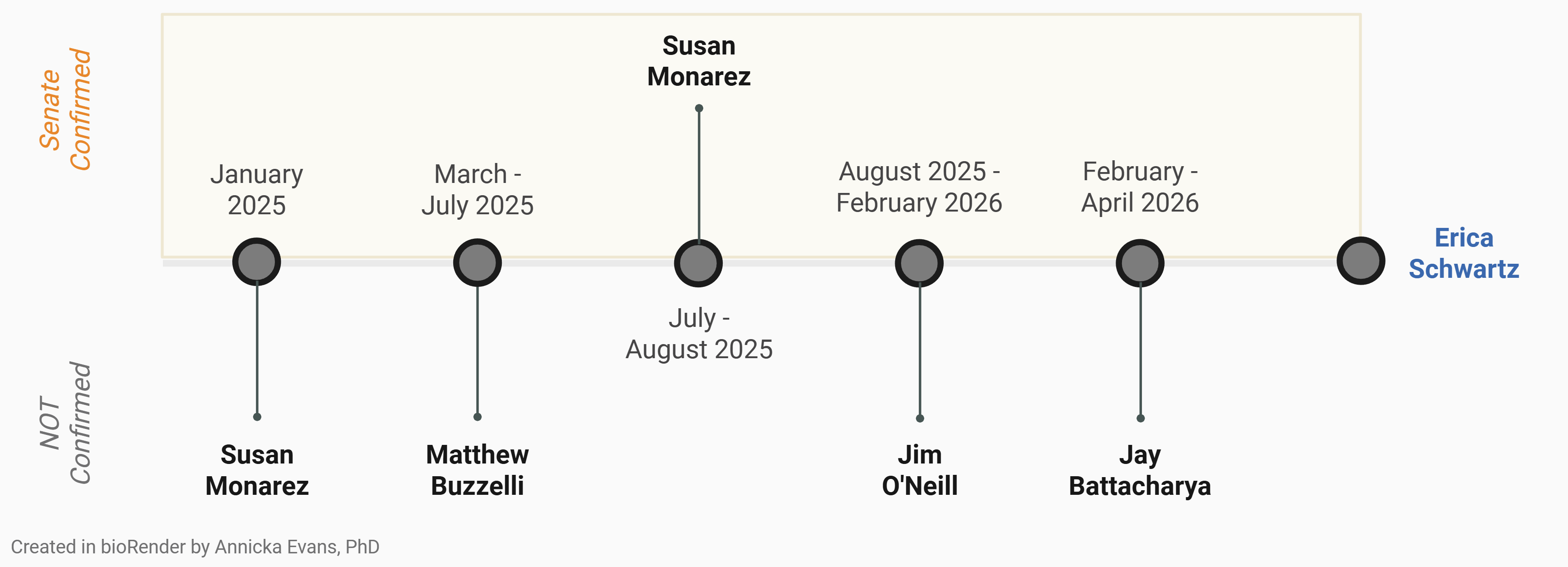
A few more sips: This nomination comes after an unusually unstable period for CDC leadership. The agency has cycled through several leaders since President Trump took office, with only one making it through Senate confirmation (see graphic below). A high turnover rate like this undermines the agency’s ability to maintain continuity in purpose and provide steady guidance to the public. I am hopeful that with Dr. Schwartz’ strong qualification she will be confirmed and hold the position for some time.
5. The Human Side
The Tea: A recent Politico article suggested that most Americans doubt vaccine safety. Dr. David Higgins, a pediatrician and public health physician, firmly pushed back, arguing that this interpretation doesn’t hold up under closer scrutiny.
“One of the greatest threats to childhood vaccination is the normalization of skepticism, even though it isn’t actually the norm.” - David Higgins, MD, MPH

A few more sips: Dr. Higgins walks through how survey design and question framing can distort how public opinion is interpreted. In this case he showcases a particular question that made skepticism appear more widespread than it is. He also brings attention to a plethora of surveys and published research showing that vaccine support is actually quite resilient. There has been some slow decline in recent years, but not to the extent where we can say that the majority opinion is that vaccines aren’t safe.
Biotech Term of the Week
Paid Subscriber Bonus Content
Biologics License Application (BLA)
