

Let’s get into this week’s cup of biotech tea. ☕ If you only have time for one this week, I’d start with #2!
mRNA-based flu vaccine recommended by FDA advisory committee ➡️
A CAR-T therapy milestone hit with first solid-tumor approval ➡️
Dexcom’s OTC continuous-glucose monitor expands to children ➡️
Denali Therapeutics makes gains by selling their Priority Review Voucher ➡️
How do you feel about genetic screening in infants? An opinion piece. ➡️
Bonus: Commissioner’s National PRV (4th of FDA Encouraging Innovation series) ➡️
1. Story I’m Watching
The Tea: The mRNA vaccine platform is expanding with the FDA’s vaccine advisory committee unanimously recommending Moderna’s mFlusiva (mRNA-1010) for adults over 50 this past week. The FDA has now committed to make a decision by August 5th.
mFlusiva is an mRNA-based vaccine similar to that of the Moderna and Pfizer COVID-19 vaccines. A lipid nanoparticle encapsulates three mRNAs that each encode for the hemagglutinin (HA) glycoproteins of influenza A-H1N1, A-H3N2, and B-Victoria. The Phase 3 trial data was published in NEJM last month and showed that the the mRNA-based vaccine reduced the risk of influenza-like illness by 26.6% relative to the standard-dose vaccine it was compared to! This bump in efficacy combined with the added technology benefit of quicker seasonal pivots, may be a game changer for protecting against seasonal strains.

A few more sips: In February it was announced that the agency would not even review the application because they felt that the clinical data did not have a sufficient control arm — they wanted Moderna to compare the new mRNA-based flu vaccine against a currently approved high-dose flu vaccine, instead of a standard-dose. The high-dose flu vaccine is currently what’s recommended for adults over 65. Moderna had revealed that the agency, while hoping for the high-dose comparator, also noted that they would accept the standard dose in the Phase 3 study. The reversal in February left the industry confused. The recommendation by the VRBPAC indicates this concern no longer exists.
2. From the Bench
The Tea: A new CAR-T therapy milestone has been achieved with the first solid-tumor CAR-T therapy approved in China! There are around a dozen approved CAR-T therapies globally but they are for cancers like leukemia, lymphoma, and multiple myeloma, not solid-tumors, which account for a large portion of cancers.
CARsgen, a biotech company headquartered in China, has been developing satri-cel, which is a CAR-T therapy that uses a patient’s own T-cells, after being engineered to recognize a protein known as Claudin 18.2 (CLDN18.2), to treat specific CLDN18.2+ gastric and stomach cancers. Satri-cel’s Phase 2 data, which consisted of patients that had all failed at least 2 prior treatment plans, demonstrated a subtle but meaningful increase in survival (~8 months vs 5.5 months).
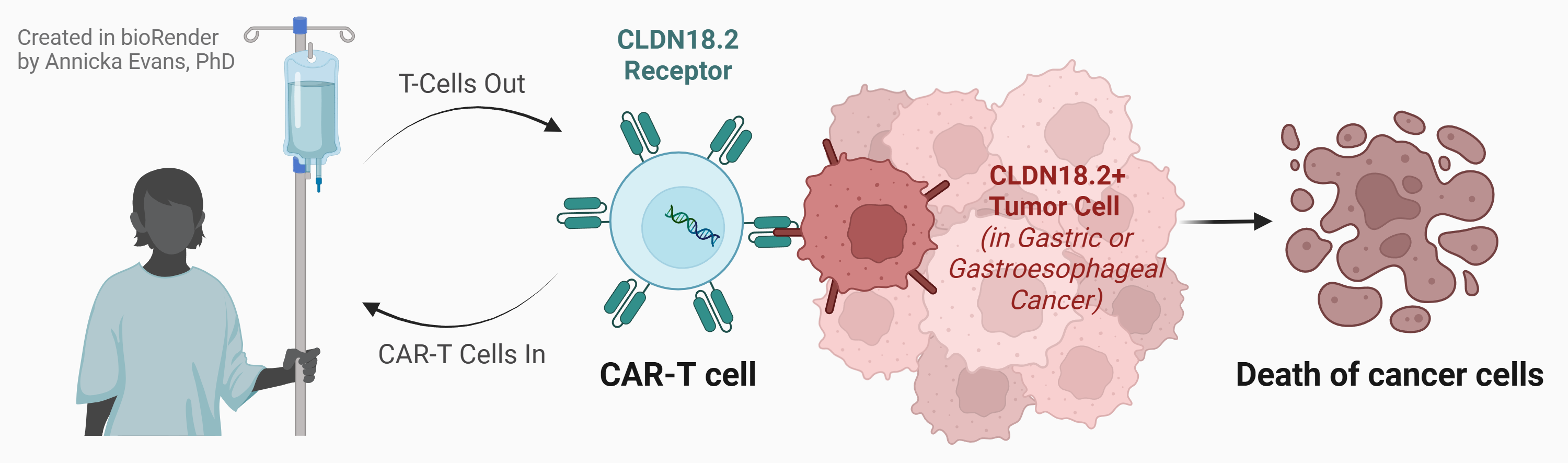
I enjoyed this summary on Instagram by Dr. Yasmin Mohseni who works in CAR-T research.

A few more sips: A particular challenge of solid-tumor CAR-T therapy is identifying a target antigen that is not also on healthy tissue. The discovery of CLDN18.2 is an incredibly important advancement for this reason. It is minimally expressed in normal tissue but upregulated in gastric and gastroesophageal junction adenocarcinomas (GEAs).
Message me if you have a recent science development you’d like to see featured!
3. Bio[Tech]
The Tea: We have another FDA approval to discuss (the theme of this week, it seems)! Stelo, made by Dexom, is now the first over-the-counter continuous glucose monitor for children.
Stelo was approved for use in adults in 2024 and is a way to better inform people about how daily lifestyle and diet choices impact their glucose levels. It’s a small, waterproof, device placed on the back of the arm that can be worn for up to 15 days at a time. A small flexible wire is inserted by the applicator into the arm’s subcutaneous tissue, and near real-time glucose values (up to 15 min old) are displayed on the paired phone application. Interstitial blood glucose levels are measured by the wire biosensor, and readings are transmitted via a Bluetooth transmitter.
With this new pediatric clearance, the hope is for the device to be a useful tool in managing prediabetes in children over 2 years old, but who are not using insulin.

4. The Rulebook
The Tea: Denali Therapeutics has sold a previously awarded priority review voucher (PRV) for $195M!
P.S. This bounces nicely off last week’s Biotech term of the Week (where we discussed what a PRV is and how to get one).
Denali Therapeutics is a Bay Area biotech company focused on developing drugs that can cross the blood-brain-barrier (BBB). They were awarded a PRV earlier this year, with the approval of AVLAYAH, an enzyme replacement therapy for pediatric Hunter syndrome treatment. It has not yet been announced who the buyer is. Denali will use it for their clinical pipeline which includes therapies for Sanfilippo syndrome, dementia, Pompe disease, and Alzheimer’s.
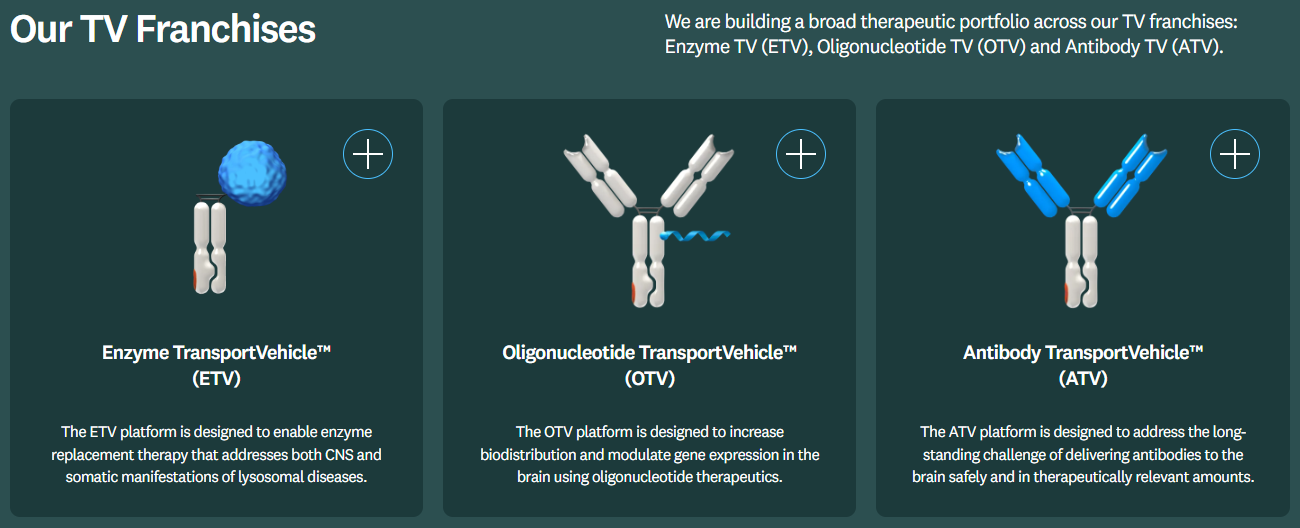
A few more sips: Denali has developed a proprietary TransportVehicle (TV) platform that is designed to help large molecules cross the BBB. The TV platform uses engineered Fc domains that bind to native transport receptors (e.g. transferrin, CD98). Target therapies are ferried through the BBB by the specialized transporter.
5. The Human Side
The Tea: The NIH is funding a study to genetically screen 30,000 infants for a panel of different conditions that are able to be treated within the first year of life. This opens up the potential for parents to take early action to prevent or slow-down disease. In this NYT opinion piece, Dr. Daniela Lamas, a physician and mother, walks us through how she thinks about infant genetic screening. She lands on the side of knowledge is power but also understands the hesitancy.
“At the core of our hesitation is a concept called genetic exceptionalism — the idea that genetic information is uniquely dangerous, uniquely frightening, uniquely deserving of protection. For decades this has been a foundational assumption in medical ethics. It has shaped consent laws, insurance protections and the way doctors decide what to tell patients and what to withhold. The question worth asking now is whether that exceptionalism still serves us.” - Dr. Lamas
In her piece she walks us through her experience as a new mother but also earlier infant screening datasets that, to the surprise of some, show that receiving genomic results didn’t increase parental anxiety as much as expected. Dr. Lamas is a proponent of genetic screening but, importantly, building a system that is ready to support it (genetic counseling, parental leave, trained pediatricians, etc.).

Biotech Term of the Week
Paid Subscriber Bonus Content
Commissioner’s National Priority Voucher (CNPV)
