

Let’s get into this week’s cup of biotech tea. ☕ If you only have time for one this week, I’d start with #2!
A new(er) approach to treating Alzheimer’s gets promising early results ➡️
Macrocyclic peptides filling the gap between small molecules and antibodies ➡️
Restoring both function and sensation in a complete spinal chord injury ➡️
Dexcom is the first participant in the FDA’s TEMPO pilot program ➡️
A Rhode Island “most wanted” secretly living as a biotech executive ➡️
Bonus (paid): Global Drug Applications (a table of top countries nomenclature) ➡️
1. Story I’m Watching
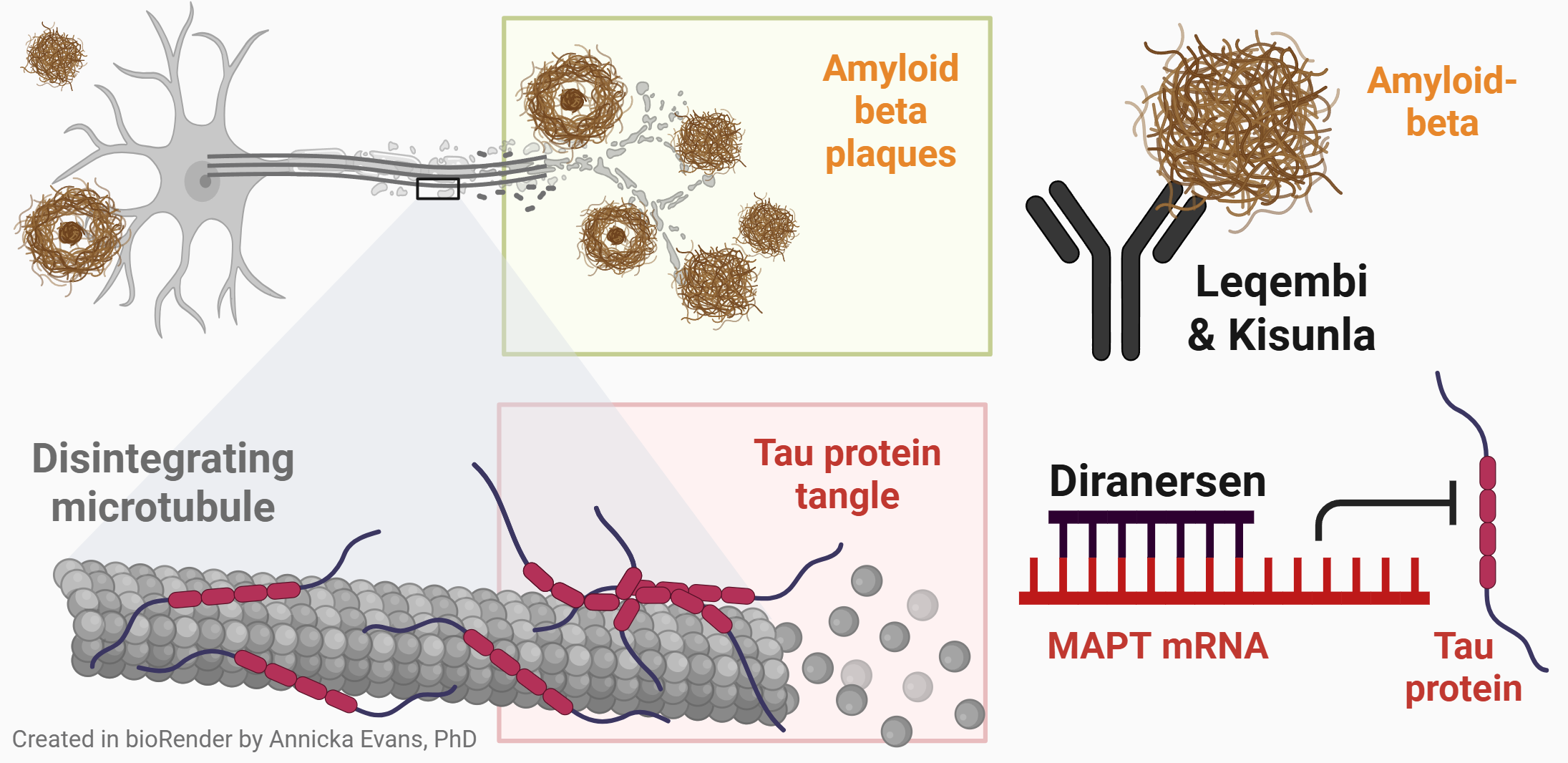
The Tea: Biogen and Ionis just broke results from an early study evaluating another arm of their Alzheimer’s pipeline — diranersen. While their FDA approved Alzheimer’s drug, Leqembi, as well as Eli Lilly’s Kisunla, aim to reduce amyloid-beta, diranersen is an antisense oligonucleotide designed to reduce Tau. Up to this point, tau-clearing attempts have been largely unsuccessful, making this an exciting moment.
They announced the results of their Phase 2 CELIA study at this year’s Alzheimer’s Association International Conference (AAIC), demonstrating that diranersen slowed clinical decline by 26% (using one of the secondary endpoints) when administered at one of the doses tested (60mg every 6 months). For reference, the two approved amyloid-beta therapies slow clinical decline in a similar range (27% and 35%) - making it pretty comparable if it holds up in Phase 3 investigations. One potential upside is that diranersen is not expected to lead to the type of brain swelling or micro-bleeding sometimes associated with amyloid-clearing antibodies (known as ARIA). ARIA, while typically asymptomatic, has been one of the larger criticisms of the two available therapies.
A few more sips: While Kisunla and Leqembi are antibodies that bind to and remove aggregating amyloid beta protofibrils and/or plaques, diranersen aims to reduce the production of tau by targeting the upstream MAPT mRNA that produces it.
2. From the Bench
The Tea: Just this past week the FDA approved the first oral PCKS9 inhibitor for lowering cholesterol. Similar to the Psoriasis drug landscape (which we discussed last week), the dominating PCKS9 therapies are injectable monoclonal antibodies. The newly approved Lipfendra, developed by Merck, is a more convenient option for hypercholesterolemia patients.
Lipfendra is a novel macrocyclic peptide. This newer modality is attempting to bridge the gap between convenient small-molecules that can’t always effectively bind to many protein surfaces (the ‘undruggable’ problem) and less convenient but often better-binding antibody injectables. They are intermediate in size, making it so you can harness the benefits of both.
Watch this helpful short video by Merck to better understand how they work!
A few more sips: A few weeks ago (Jun 4 issue) we highlighted Eli Lilly’s novel cholesterol-lowering gene editor, VERVE-102, designed to introduce a stop codon in the PCKS9 gene. This is such a cool example of how you can approach treating disease from multiple angles. We have monoclonal antibody injectables, this newly approved oral inhibitor, and (coming down the pipeline) a gene editing therapy.

3. Bio[Tech]
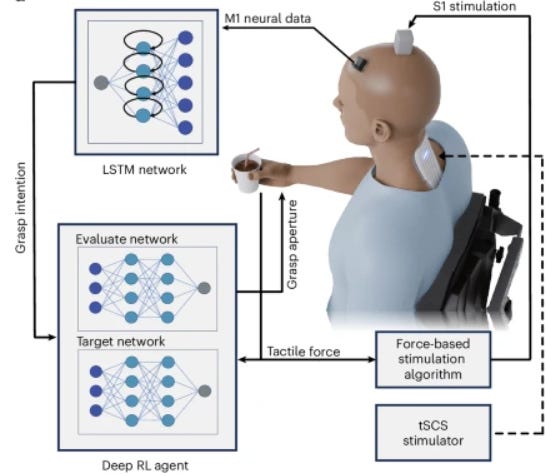
The Tea: Just last week the latest success in restoring function and sensation in limbs from spinal chord injuries was published in Nature Medicine. A research group from Northwell Health developed a ‘double neural bypass’ (DNB) — designed to simultaneously stimulate the brain and spinal chord — and tested it in a 42-year-old man with quadriplegia, Keith Thomas.
In 2023 Thomas had several electrode arrays and stimulation patches placed and participated in testing sessions multiple times a week. The results were life-changing. His arm strength increased by 86% and 62% (right and left, respectively). Years later, and with the addition of an orthotic device, he is able to drink from a cup, something most people take for granted.
The DNB decodes signals to determine movement intentions and uses tactile sensory pads on the fingers to attempt to provide sensation.
4. The Rulebook
The Tea: The FDA announced the first selected participant in their Technology-Enabled Meaningful Patient Outcomes (TEMPO) for Digital Health Devices Pilot. Dexcom, Inc., through their Dexcom Glucose Health Program, will be working to implement an AI-powered digital infrastructure that takes data from their glucose sensing devices (Dexcom G7 and Stelo) and contextualizes it with other lifestyle information to provide more personalized and holistic insights to patients.
The pilot is meant to help provide real-world data for how utilizing these kinds of digital tools can make meaningful shifts in managing chronic conditions in the U.S.
A few more sips: Reminder that last month we discussed their over-the-counter Stelo glucose biosensor, which just got approval to be used in children 2 and older. Their G7 device is also a glucose biosensor but is prescription and designed for diabetes management.

5. The Human Side
The Tea: In a departure from previous weeks, this isn’t an inspiring story or a respected opinion, but one of the most upsetting biotech stories I’ve heard in a minute.
A Rhode Island wanted fugitive, Ronald Fischer — convicted (in absentia) of first-degree sexual assault in 2005 — was arrested last week. He has been a fugitive for 20 years and appears to have been working in the biotech industry under an alias, Richard Graydon, for nearly 5! At the time of the arrest he was Chief Medical Officer at Los Angeles-based Immix Biopharma. In a statement from Immix they disclosed that they have terminated him and that in the interview process he claimed to have a robust resume and worked for Merck and J&J. STAT, who broke this story, has said they haven’t been able to yet verify his resume.
I sincerely hope no colleagues had bad experiences with him while he was avoiding prison. While no-one but Fischer is responsible for this, it does make you wonder how we can better vet job candidates.

Biotech Term of the Week
Paid Subscriber Bonus Content
Global Drug Applications
