

A quick note before we begin: I’m currently on sabbatical and just completed walking the beautiful West Highland Way with some wonderful girlfriends. While planning this trip, I wanted to find a way to keep sharing something with you each week while being able to leave my laptop thousands of miles away at home. As such, I prepared two special edition pieces inspired by places I’d be visiting. Regular issues of The Biotech Tea ☕ will return in two weeks, on September 17. I hope you enjoy!
Scotland, oh, Scotland! This beautiful country is the most northern part of Great Britain. The capital is Edinburgh, the heart of Scotland, and it’s where you can find the historic and stunning Edinburgh Castle.


Just about 30 minutes West is the country’s largest city and industrial hub, Glasgow.


Within each of these are two biotech research hubs — the University of Edinburgh and The University of Glasgow. While we don’t always think about Scotland as a biotech powerhouse (or at least admittedly I don’t), it has both a history and current day presence very much worth acknowledging.
Early Biotech Legacy
We’ll start Scotland’s biotech history with the legacy of Dolly the Sheep. I don’t think I realized that Dolly, one of the first successful animal clone experiments, was born at the Roslin Institute just outside Edinburgh.
Dolly, born in 1996, was so important because it demonstrated that all the information needed to make an entire sheep was still inside a fully differentiated adult sheep cell (outlined in blue below). The nucleus from an adult sheep mammary gland cell was combined with a egg cell from a donor sheep. A surrogate sheep carried the resulting embryo, which, after full gestation, resulted in Dolly.
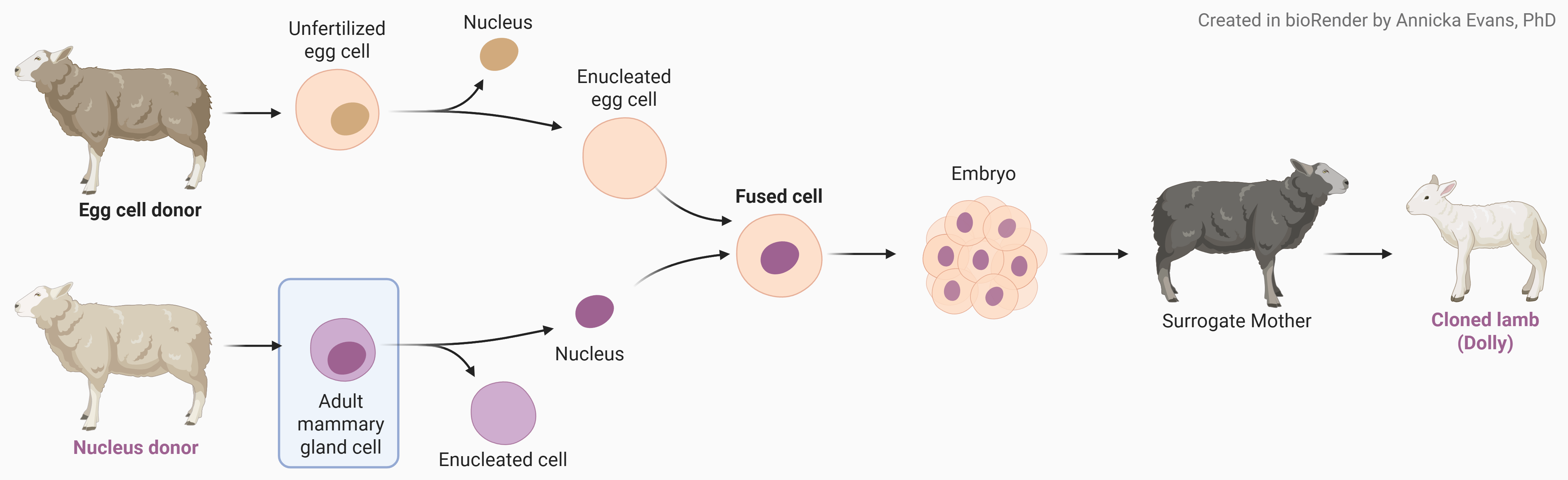
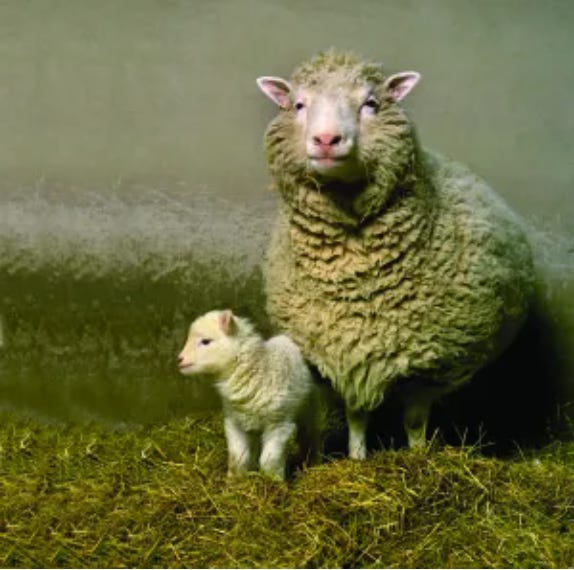
Dolly died of lung disease after living at the Roslin Institute for almost 7 years and giving birth to six lambs, including Bonnie. Analysis suggests nothing about her unusual beginning of life lead to her death. Her life, and the years of work done at the Roslin Institute, opened up the field of regenerative medicine!
The Roslin Institute, to this day, is dedicated to sustainable agriculture through innovative animal bioscience.
Current Biotech Landscape
Dolly might be one of the earliest legacies, but there are many current day innovative biotech companies that have their headquarters in Scotland. Let’s cover a handful of them!
MiAlgae is harnessing the Scottish whiskey industry (how cool?!) to reduce our reliance on marine animals for Omega-3s.
Founder and CEO Douglas Martin started the company in 2016 to help take strain off our oceans. By taking distillery byproducts and feeding them to their proprietary microalgea, they are able to create a DHA (a specific Omega-3) enriched product. In it’s powderized form it can easily be added into animal feed, making a sizeable portion of the market no longer reliant on ocean fish. Their technology won them a spot as a finalist in the 2024 Earthshot Prize competition.
Resolution Therapeutics is clinical-stage company trying to solve inflammatory and fibrotic diseases using regenerative macrophage therapy.
Last year the macrophage therapy space achieved a big milestone with the announcement of positive data from the MATCH trial, out of the University of Edinburgh. This Phase 2 trial was testing a non-engineered regenerative macrophage therapy (RMT) for liver cirrhosis and showed no safety concerns and prolonged survival compared with standard care.
Resolution Therapeutics is moving with that momentum as they continue collecting data in their early Phase 1/2 clinical trial looking at their engineered RMT, RTX001, for end-stage liver disease.
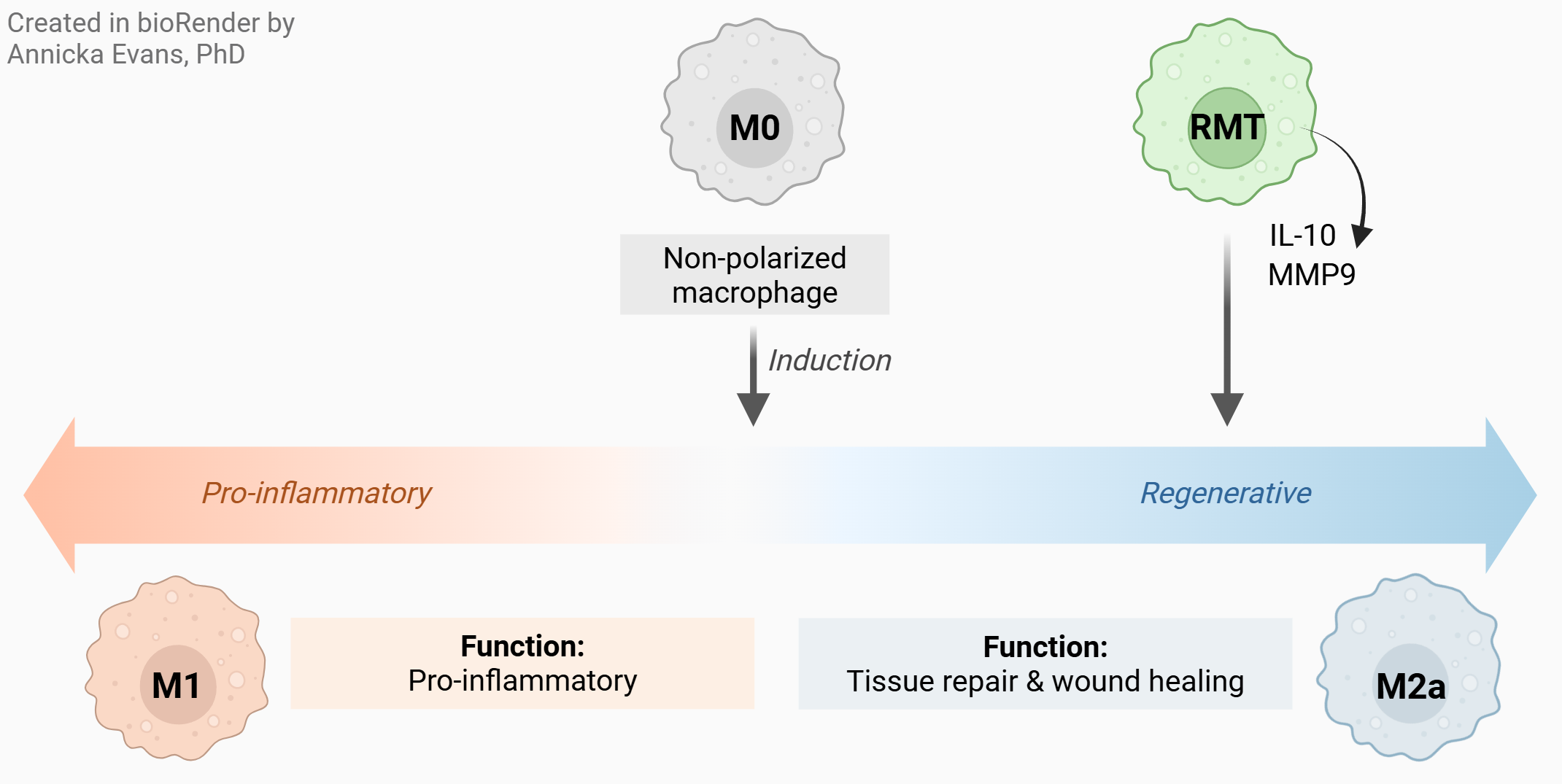
What is the basis of the science? Macrophages, put very simply, have an pro-inflammatory state and an anti-inflammatory state. RTX001 is engineered to continuously self-produce IL-10 and MMP9 which act to lock in and support the macrophages more regenerative functions. By introducing these engineered macrophages into livers already heavily damaged liver tissue, tissue remodeling can be advanced.
Ingenza is a biotech contract research, development, & manufacturing organization (CRDMO) focused on solving manufacturing challenges.
This company contracts to do it all! They take on projects ranging from cell line development to manufacturing for both biologics and small molecule therapies. Established in 2003, they have built out what they called their ‘InGenius’ platform which is made up of many proprietary technologies that they believe gives them an edge when helping streamline drug development.
One such technology is codABLE — an AI-driven DNA optimization technology aimed at maximizing recombinant protein production. Each amino acid in a protein chain can be signaled by a few different 3-letter base pair sequences (known as codons) but some are present in the production cell in higher quanitites than others (or will be incorporated with higher frequences). Codon optimization is the strategic selection of each codon with this information. Ingenza claims their codABLE technology outperforms other leading protein production technologies.
So to end…
Just like with most places unfamiliar to us, Scotland often gets a very two-dimensional take — magnificent castles nestled amongst heather-lined lochs & the warmth of Whiskey loving Scots (both true). But I hope today we have made it more three-dimensional! Scotland is the home of a rich biotech landscape.
Loved reading this. Edinburgh is one of my favourite cities. The different levels of the city, the architecture, the view from the castle. I wish I could visit it again for a 3rd time. Have a lovely time at Scotland, Annicka.
Scotland is so beautiful! 😍 I walked the West Highland Way and the Arran Coastal Way several years ago and I'd love to go back. Enjoy the rest of your time there!