

🗣️This week’s issue is in the usual format but with a slightly different flavor! How come? I spent last Thursday attending Utah’s BioHive Premieres Event and wanted to cover some of the highlights in this week’s newsletter! Salt Lake City may not be the first place that comes to mind when you think of biotech, but it deserves a closer look. With the University of Utah feeding innovation and a strong tech sector, there is a lot that is happening here.
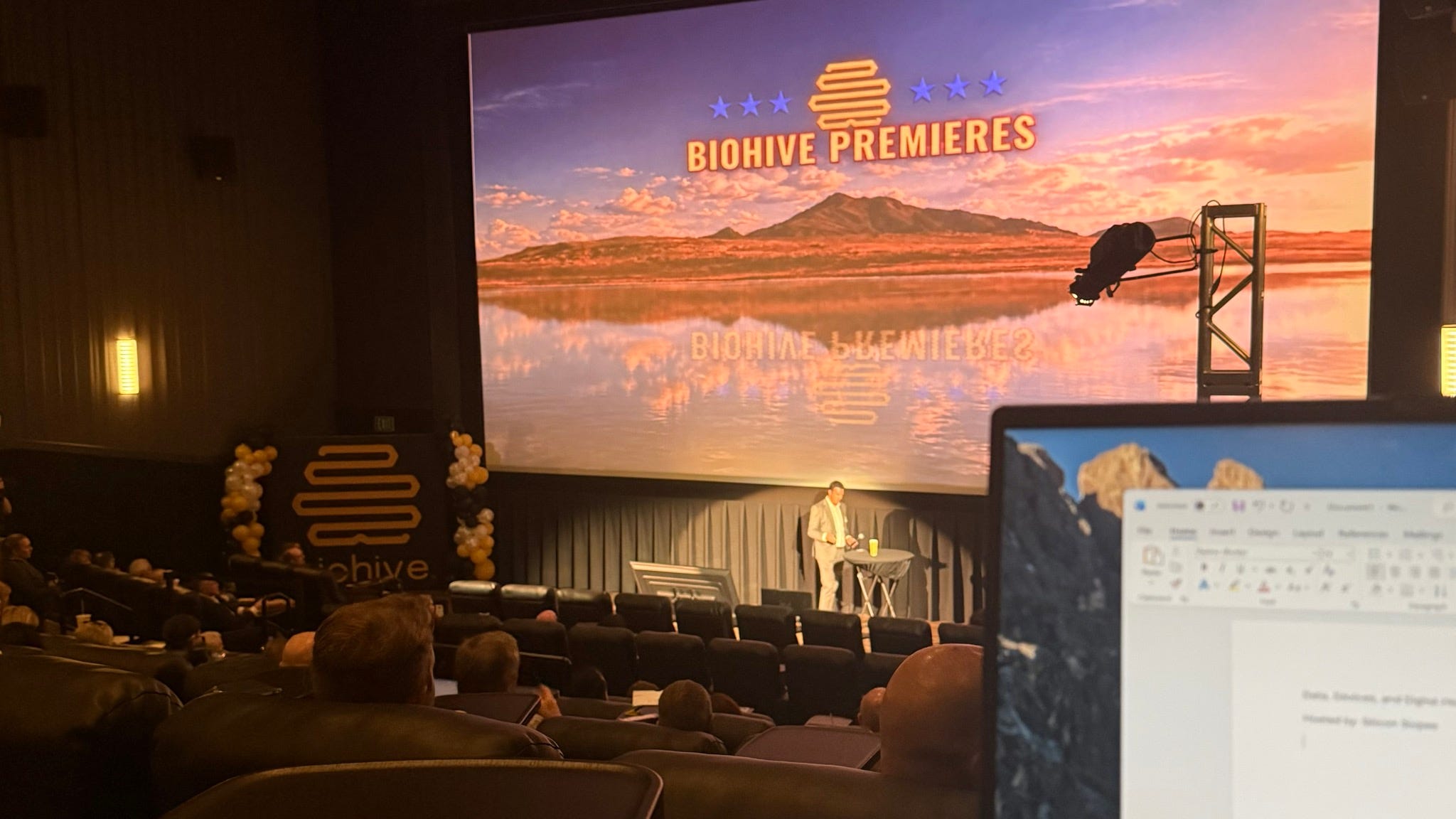
I did feel like I came back with a lot more science than policy to unpack, so we’ll be doubling up on ‘From the Bench’. And can I petition to have more conferences at movie theaters?? Sitting in a luxury recliner was top tier.
Let’s get into this week’s cup of biotech tea. ☕ If you only have time for one this week, I’d start with #1!
Seek Labs is developing CRISPR-based pathogen therapies using BioSeeker ➡️
Halia Therapeutics is looking to harness and bottle-up disease resilience ➡️
BioFire Defense is a powerhouse of easy-to-use syndromic testing diagnostics ➡️
Recursion uses automated labs and AI to find hidden biology relationships ➡️
Huntsman Cancer Institute continues to modernize to improve patient care ➡️
1. Story I’m Watching
The Tea: Seek Labs, founded in SLC in 2016, is a CRISPR-based company looking to help us prepare for the next pathogen outbreak before we even know it’s coming.
Their programmable ablation platform is driven by BioSeeker, an AI genomic intelligence engine that contains mapped genome sequences of over 145 different high-priority pathogens. With that information it analyzes the variable and conserved regions of the genomes, cross-references them against target host genomes, and identifies the best cut sites that will disable the pathogen’s ability to replicate without negative safety consequences in the host. They call this sequence ablation therapeutics (SAT).
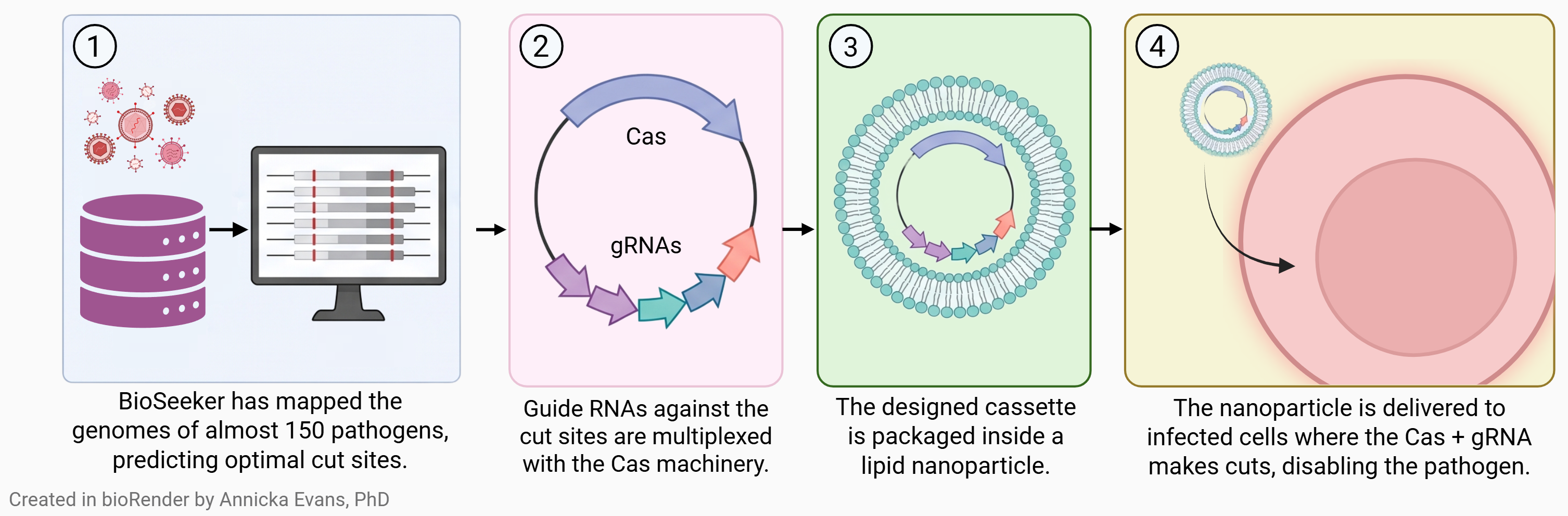
A few more sips: Seek is actively piloting this in multiple applications. One of the more striking examples is in their development of a pan-influenza A (FluA) therapeutic (designed to target multiple subtypes rather than one or two). The company has analyzed more than 116k FluA genomes using BioSeeker, identified potential cut sites, designed targeting gRNAs, and validated them in cellular assays against H1N1 and H3N2. Seek was awarded a $2M USDA grant to advance. Seek is also working with the Department of Agriculture on the development of a product targeting avian influenza (H5N1).
When the talk was over, I was left so excited to see what comes from their many investigational programs (RSV and Ebola are two!). I’ll definitely be following!
2. From the Bench
The Tea: Halia Therapeutics has built their pipeline on the concept of synthetic resilience — what can we learn from people who remain healthy despite a predisposition to disease, and can we harness that biology and provide it as a preventative or therapy?
While their pipeline covers a variety of diseases, one of their furthest along investigational drugs — ofirnoflast (or HT-6184) — just finished a Phase 2 trial in patients with lower-risk myelodysplastic syndromes (MDS). MDS is a group of chronic blood disorders where bone marrow stem cells fail to produce healthy blood cells. Patients with MDS are also higher risk for developing acute myeloid leukemia (AML). Scientists at Halia hypothesize that chronic bone marrow inflammation may reinforce the disease state and that reducing inflammation improve blood-cell production. Ofirnoflast is an allosteric inhibitor of NEK7, a protein involved in the activation and assembly of the NLRP3 inflammasome. By inhibiting NEK7, the intended effect is a significantly reduced downstream inflammatory signal.

In its Phase 2a study, Halia reported that 72% of patients achieved improvement in red blood-cell production at week 16. During the BioHive presentation, Halia CEO shared that that responses remained durable through 32 weeks. The company is now preparing for a larger Phase 3 trial in 2027.
Message me if you have a recent science development you’d like to see featured!
3. Bio[Tech]
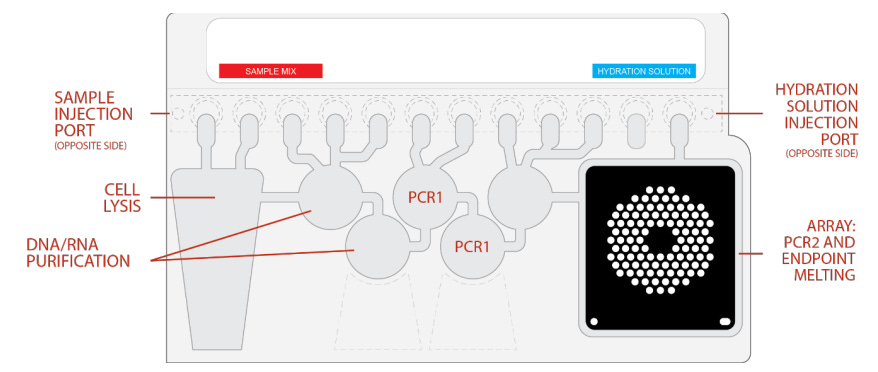
The Tea: BioFire Defense (part of bioMerieux) is known for its development of syndromic diagnostics, an approach that recognizes that many different pathogens can cause similar symptoms. For example, identifying early if someone with a fever, headache, and fatigue has influenza, malaria, or Ebola is critical for determining the appropriate treatment and infection-control measures. BioFire’s approach is to use multiplex PCR to detect many syndromic-ally similar pathogens simultaneously.
One of the more distinguishing features of the technology is its easy to use pouch system that centralizes all the reagents and reaction chambers so that the user only spends about 2 minutes on sample prep. After adding the sample and hydration solution, the pouch is plugged into their BioFire FilmArray PCR system and about an hour later results are available. A few issues ago we mentioned BioFire’s GI panel that covers cyclospora.
A few more sips: BioFire has responded to the ebolavirus outbreak this year. They have shipped 7 of their PCR systems and hundreds of their Global Fever Special Pathogens Panel that screens for ebolavirus as well as 15 other pathogens with a similar initial presentation. Production of this product has increased over 600% this year!
4. The Rulebook From the Bench #2
*just this week we’re doing a second ‘From the Bench’ to accomodate all the incredible science presented at the BioHive event.
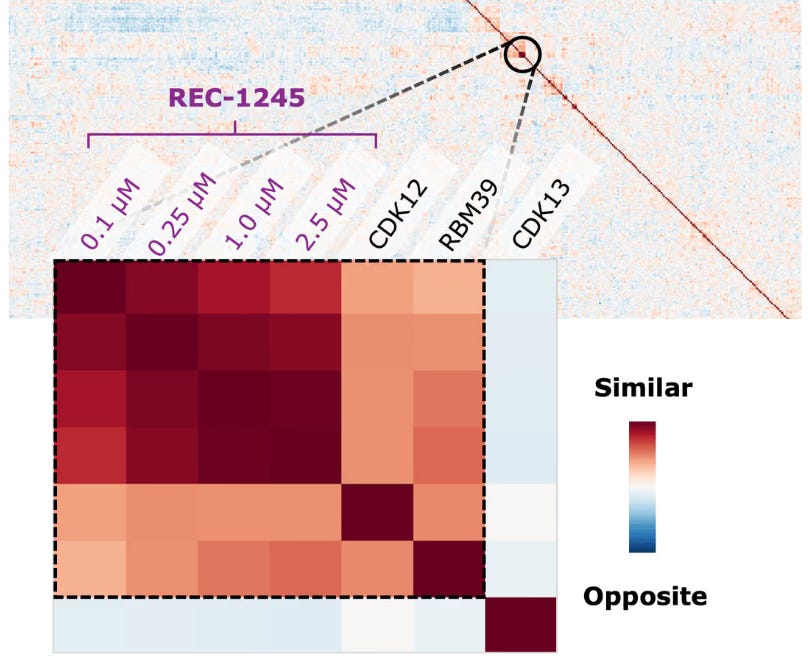
The Tea: Recursion is taking an automated approach to try and discover therapeutics faster. Using robotic wet-labs, millions of experiments are run each week to build out data sets that investigate hidden relationships in human cell biology. One of the data layers they have invested heavily in is what they called Phenomics. Cells are plated in a dish, perturbed in some way (gene knockout, drug exposure, virus exposure, etc.), and high-resolution morphological changes are observed via imaging. Millions of these experiments bring together a highly enriched dataset that, when run through an AI model, can begin to identify relationships between changes. If knocking out gene X and exposing cells to drug Y produce similar phenotypic changes, they may be affecting related biological processes.
One successful example of this is with their investigational drug for solid tumors and lymphomas — REC-1245. Backing up a bit, CDK12 has been a desired target for cancer therapy for nearly 2 decades. However, CDK12 is structurally very similar to CDK13, making it challenging to selectively inhibit one without also inhibiting the other and potentially introducing unwanted toxicity. Recursion was able to use its phenomics datasets to identify RBM39, an RNA-splicing factor whose loss produced changes similar to CDK12 loss, but different from CDK13 loss. REC-1245 is a molecular glue degrader designed to eliminate RBM39. Their dataset not only helped find this breakthrough target, but helped them reach a clinical candidate in just 18 months.
5. The Human Side
The Tea: Salt Lake City is home to Huntsman Cancer Institute (Huntsman). As a little background, Huntsman, which is part of The University of Utah, serves the largest land area (524,000 square miles across 5 states) of any cancer center in the U.S. To keep up with the growing population and the increasing complexity of cancer and their associated therapies, they are working on expanding their capacity.
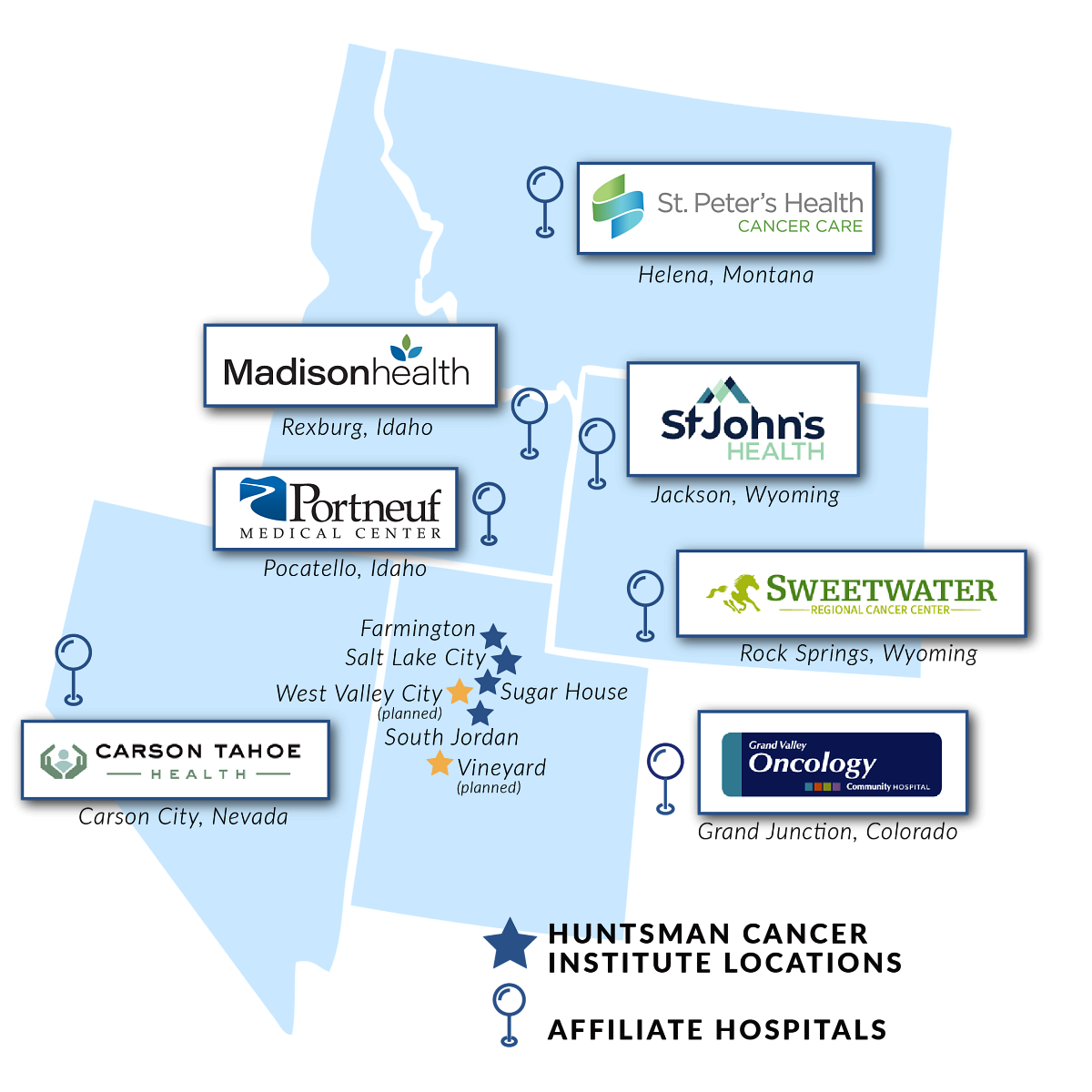
One way they are doing this is with the launch of a NVIDIA & HP supercomputer! Just last week the Redtail AI factory was launched. It’s no doubt that Huntsman has a deep and broad health database, so in combining that with AI and machine learning, they hope to continue to improve treatments, patient care experience, and reduce cost.
The talk also focused on how they hope to expand their physical footprint. In the valley south of SLC (Vineyard, UT) ground just broke on a 20-acre cancer center! It will help expand care and partner more with Utah State University and Brigham Young University. They are calling it the Cancer Innovation Corridor — a physical network of tech and innovation sites that expands Huntsman’s footprint and resources.
Growing up in Utah, Huntsman has long been the name of cancer miracles. As the opening talk of the event, it was heartening to hear about the ways they are continuing to modernize.