

📌A quick note: Starting next week, The Biotech Tea will alternate weekly between issues that are free for everyone and issues exclusively for paid subscribers. The subscription price will also move to $60/year. If you've been on the fence, subscribing before October 7th at 11:59pm MST permanently locks you in at $30/year. If you missed the announcement email (sent on 9/14), I cover the details and my reasoning! Worth a read prior to the deadline. And lastly, if this is helpful, here is a short email template I drafted to ask work to cover your subscription through professional development budgets.
Let’s get into this week’s cup of biotech tea. ☕ If you only have time for one this week, I’d start with #1!
We may see a new wave of osteoporosis drugs on the heels of FDA change ➡️
Stipple Bio’s Pointillism Platform aims to make epitope-specific cancer drugs ➡️
Grail’s multi-cancer blood test gets favorable vote in FDA ad-comm meeting ➡️
A New Approach Methodology (NAM) database is released ➡️
How U.S. tariffs, effective this week, may be helping China dominate biotech ➡️
1. Story I’m Watching
The Tea: The accepted clinical endpoint for osteoporosis therapies has shifted to something much more achievable - producing a wave of new developments, biotech startups, and investors in the space.
Historically, in order to get approval for an osteoporosis therapy, the FDA required you demonstrate a reduction in bone fracture rate, requiring thousands of patients over several years in order to have enough fractures to support a positive result. In 2013 the Study to Advance BMD (bone mineral density) as a Regulatory Endpoint (SABRE) was initiated. The retrospective analysis pooled data from 52 trials and over 160k participants in order to sufficiently demonstrate that increases in BMD reduce fracture risk. Just last December (2025), the FDA formally accepted the change as a means to traditional approval! I am very interested to see developments for this indication pick up.
A few more sips: As a high-level reminder - bones are constantly remodeling. Osteoblasts are your bone builders and osteoclasts are your bone demolishers. They work together throughout life to maintain proper balance. Certain genetic conditions, and commonly after menopause in women, this balance can be lost resulting in a loss of bone density.
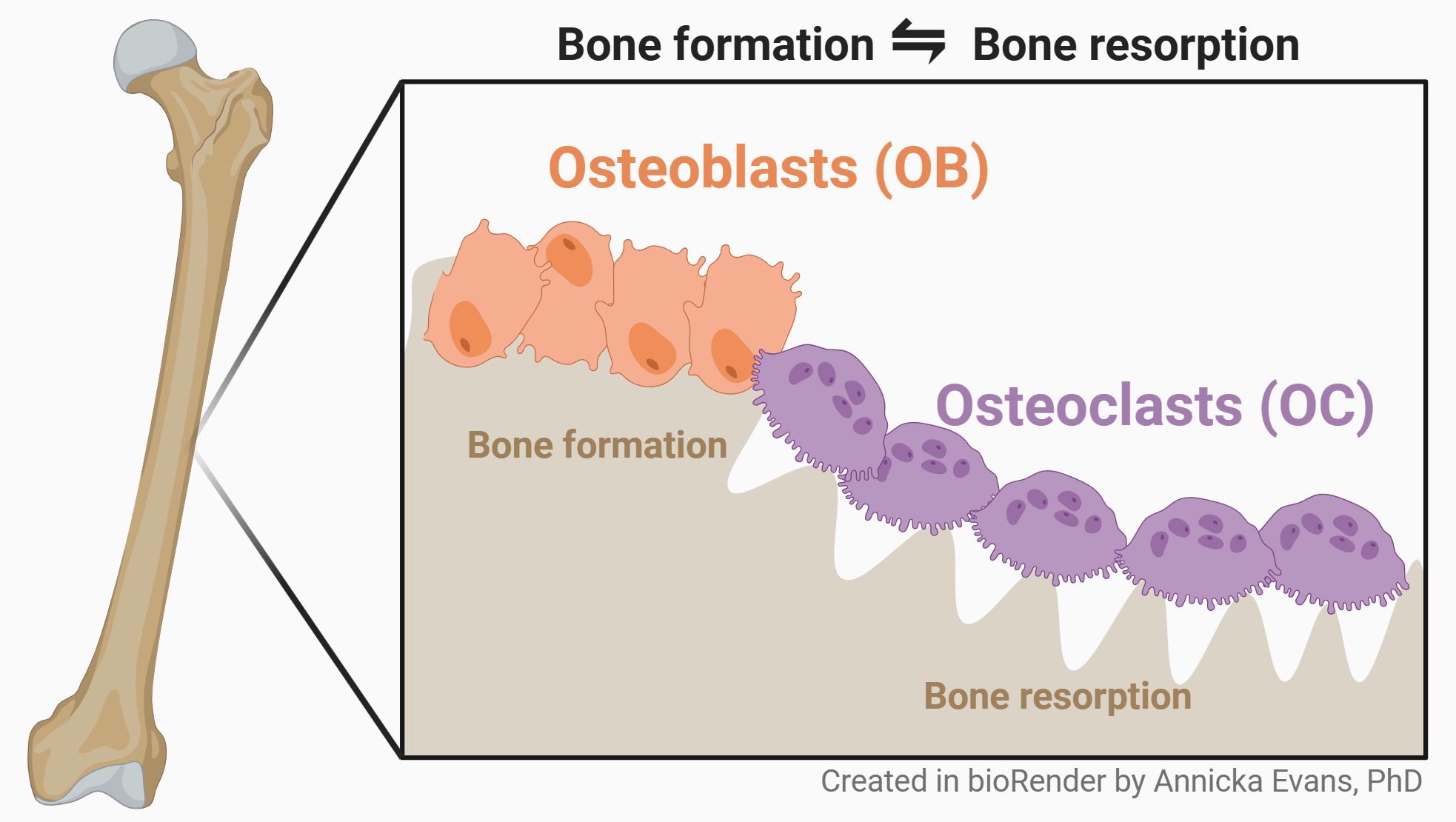
As I was exploring the landscape of osteoporosis drugs, I noticed how the therapy strategy has transitioned overtime from reducing bone resorption to increasing bone formation. See the table below for a bit more information on how this works.
2. From the Bench
The Tea: Stipple Bio, a small startup out of Cambridge, MA, is trying to further optimize cancer therapies by developing drugs that don’t just target cancer-specific antigens but cancer-specific epitopes within antigens.
It’s proven to be a difficult challenge in the field to find antigens that only display on tumor cells; when a drug’s target is also expressed on healthy cells the therapy results in off-target toxicity and unwanted damage to healthy tissue. Stipple’s ‘Pointillist Platform’ is taking the resolution one step further by looking for epitopes, or regions of antigens, that are unique to tumor cells. Data shows that even when a healthy cell may express the same protein as a cancer cell, the DNA template can sometimes lead to small amino acid differences that can be taken advantage of.
A few more sips: STP-100 is their lead candidate and we can expect to see it enter Phase 1 clinical trials next year. While we know very few details about it, we do know it is an antibody-drug conjugate (ADC) and Endpoints News reports they are developing for pancreatic cancer among other tumors. If this is the case, it adds to an expanding landscape for the deadly cancer. Rasonque, developed by Revolution Medicine, is a first in class pancreatic cancer therapy that was just approved by the FDA in August (I happened to be walking alongside Loch Lomond in Scotland and completely oblivious to news at the time).
3. Bio[Tech]
The Tea: Grail’s multi-cancer diagnostic test, named Galleri, was voted safe by the FDA’s Molecular and Clinical Genetics Devices advisory committee this past week. While the conversation consisted of some questions around sensitivity for certain types of cancers, ultimately the adcomm voted 7 to 2 in favor of Galleri’s benefit to risk profile. Until now it was commercially available as a laboratory-developed test under CLIA but if the FDA approves it, it would have the potential to be used more widely. For a concise but helpful look into the nuance of the decision I found this substack post helpful.
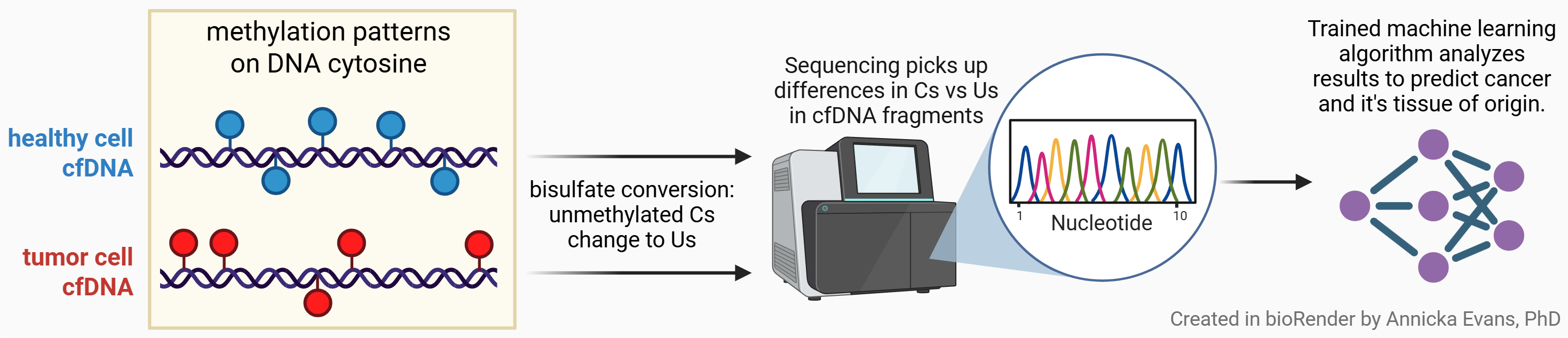
A few more sips: We haven’t covered the multi-cancer test in The Tea ☕ yet so I thought it would be useful to quickly cover the premise for how it works.
Galleri is a test that looks for methylation patterns on cell free DNA (cfDNA) fragments present in patient blood samples. The test first treats the cfDNA with bisulfite which converts unmethylated Cs into Us. The samples are then sequenced using next generation sequencing techniques and machine learning algorithms analyze the methylation patterns to determine if the DNA fragment came from a healthy cell or a cancerous one, and which tissue.
4. The Rulebook
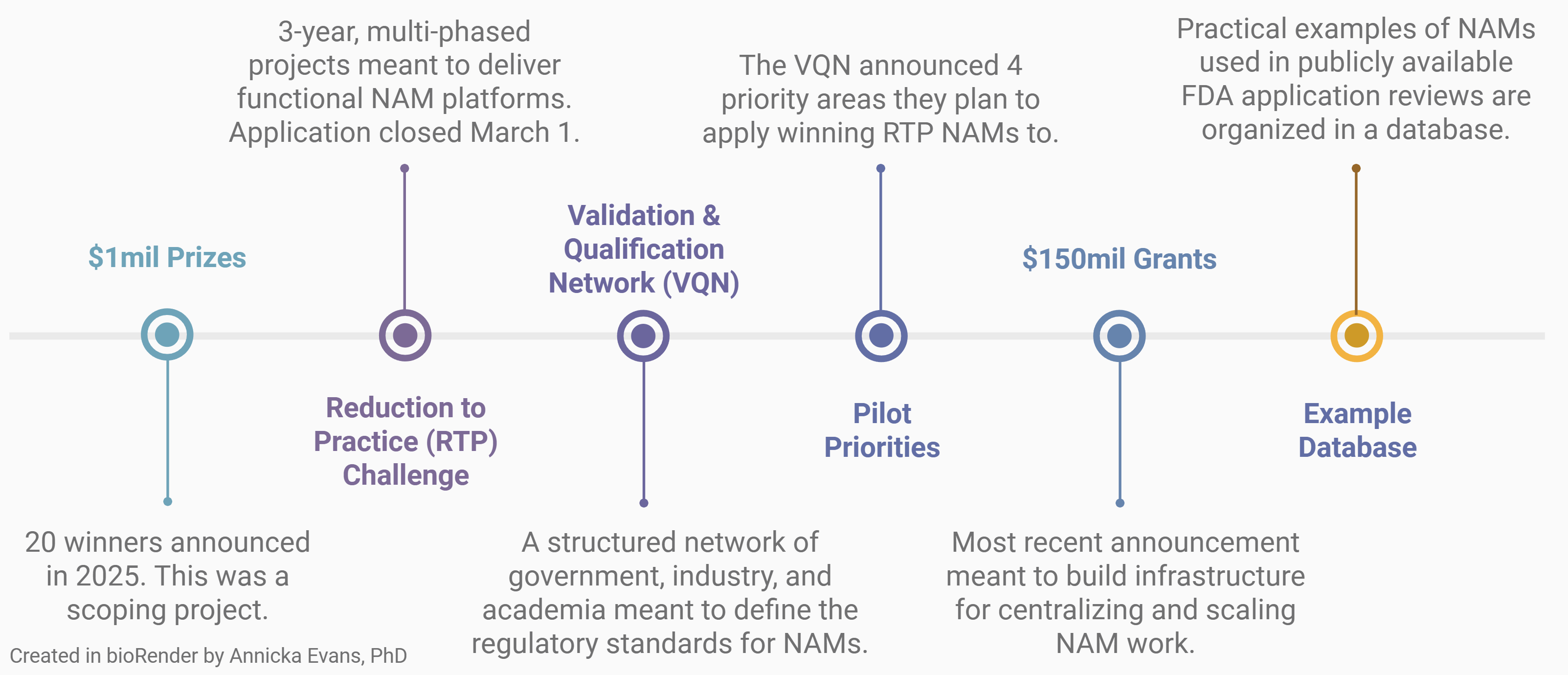
The Tea: We know that the FDA is driving motivation for the use of non-animal models in drug applications. In order to provide practical examples of New Approach Methodologies (NAMs), they have released a database that contains links to publicly available application materials. It currently contains 25 examples. Back in April, we covered the newly announced $150M in grants toward the use of NAMs. I updated the graphic to include the release of the new database.
5. The Human Side
The Tea: In this opinion piece, the Wall Street Journal Editorial Board argues that U.S. tariffs on imported drugs and ingredients, announced earlier this year but effective just this week, could ultimately help China in their push to dominate the industry. The piece focuses primarily on the impacts this may have on small biotech companies, which often have few drugs in the pipeline and limited ability to build or secure domestic manufacturing capacity. The authors note that companies encounter much lower costs and less regulation when they look abroad. The piece also discusses how the tariff pressure is pushing companies to strike deals with the government, and how this may impact approvals.

Biotech Term of the Week
Paid Subscriber Bonus Content
Glad to read about more osteoporosis coming!