

Let’s get into this week’s cup of biotech tea. ☕ If you only have time for one this week, I’d start with #1!
Influenza treatment generic approved by the FDA in time for fall Flu season! ➡️
Building muscle in muscular dystrophy with epigenetic-based therapy ➡️
A new lung ex-vivo perfusion system may lead to more accepted organs ➡️
8 new members of the advisory committee set to meet on peptides in July ➡️
The similarities between early-career scientists & professional football players ➡️
Bonus (paid): Orphan Drug Designation (5th of FDA Encouraging Innovation series) ➡️
1. Story I’m Watching
The Tea: The FDA has approved the first generic for the single-dose influenza treatment, XoFluza (baloxavir marboxil).
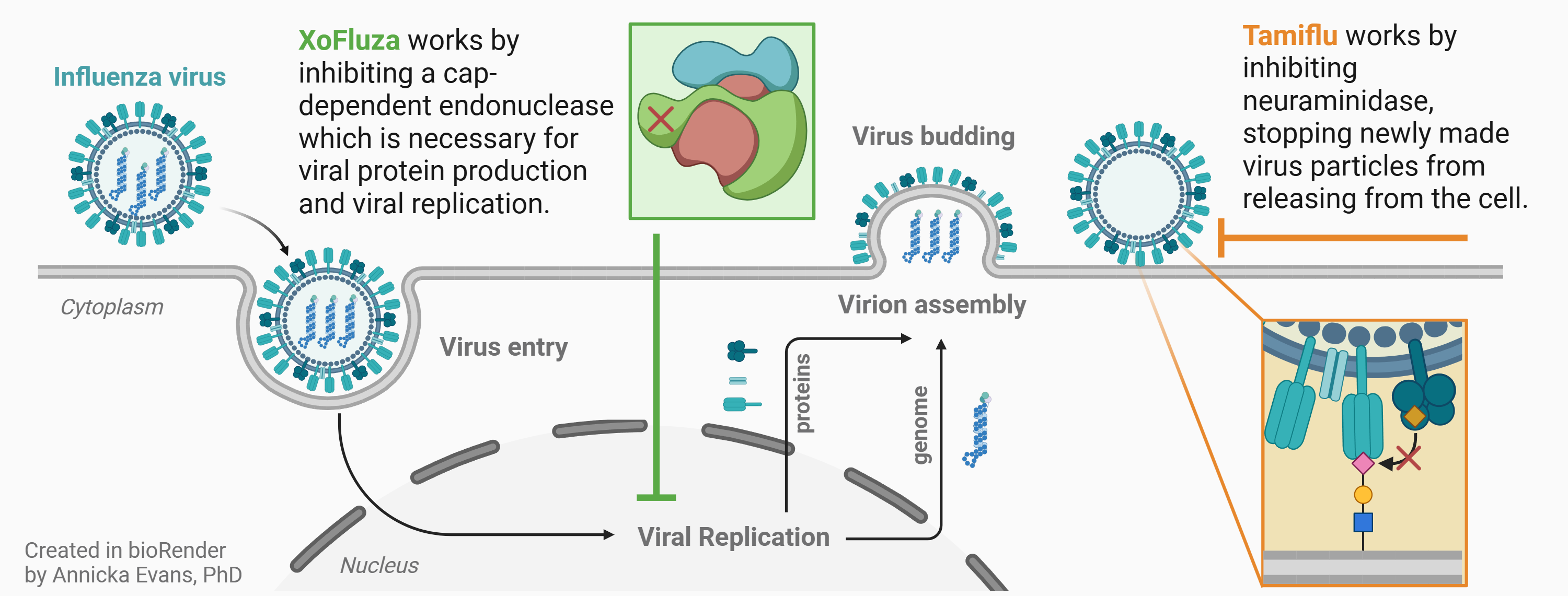
Most people are familiar with Tamiflu for influenza treatment — but unlike Tamiflu, XoFluza (made by Genentech) is a single-dose treatment and generally better tolerated. But up until now, it’s been quite a bit more expensive (and often not covered by insurance), and therefore harder to find and lesser known.
Norwich Pharmaceuticals obtained FDA approval for it’s generic version, which will provide a lower cost alternative for the upcoming flu season!
A few more sips: Tamiflu (oseltamivir) and XoFluza (baloxavir) work by blocking specific steps in the influenza virus lifecycle. Oseltamivir works by stopping newly made viruses from releasing from the cell. It inhibits the neuraminidase protein on the virus surface which acts as the final rope cutter. Baloxavir inhibits a key protein in the viral RNA polymerase (a cap-dependent endonuclease) that is necessary for viral replication.
2. From the Bench
The Tea: A gene silencing drug successfully harnessed epigenetics to help muscular dystrophy patients gain muscle mass.
Epicrispr Biotechnologies, based in the Bay Area, announced that in a Phase 1/2 trial EPI-321 lead to an average increase in lean muscle of about 0.8 pounds in 3 patients that have facioscapulohumeral muscular dystrophy (FSHD).
EPI-321 is an AAV-based gene therapy carrying the genetic code for what they call their Gene Expression Modulation System (GEMS) — a DNA-binding protein, a guide RNA, and a modulator protein. In the case of this therapy the system recognizes the Dux4 gene, which is turned off in normal cells but remains on in patients with FSHD. Their delivered modulator is designed to add methyl groups to Dux4, acting as an off-switch for expression.
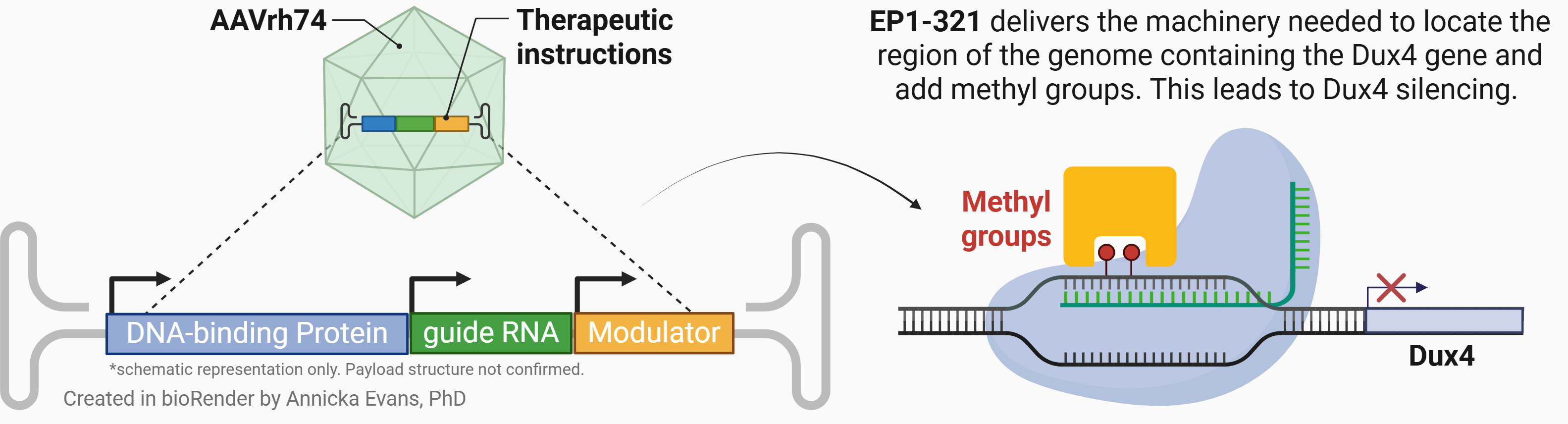
Note that the system isn’t changing the sequence of DNA at all, but rather changing the chemical groups attached to the genome - this is epigenetics!
Message me if you have a recent science development you’d like to see featured!
3. Bio[Tech]
The Tea: A new workflow for pre-transplant lung evaluation has become possible following the recent premarket approval of the LungFX device, developed by Lung Bioengineering.
The LungFX is an ex-vivo lung perfusion system (EVLPs), allowing donated lungs to be perfused in a controlled environment so they can be be properly assessed prior to being accepted by a transplant center for a recipient. But what’s different about this? EVLPs aren’t new. But the infrastructure required to house the device and run it properly, has been limiting. The current EVLP workflow requires a transplant center commit to an organ prior to evaluation.
Explant > transport to transplant center > transplant center evaluation > accept or deny.
A drawback to this system is that if the transplant center does not accept the lung, there may not be enough time to transport somewhere else.
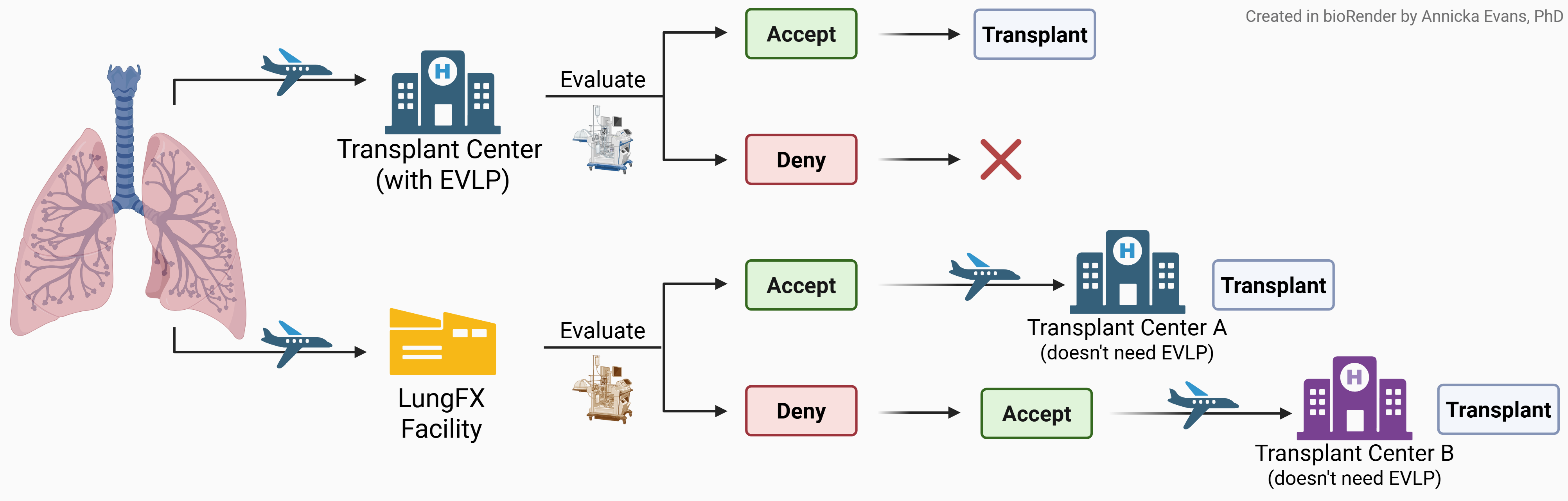
The LungFX system is set up to run in two centralized hub facilities (Maryland and Florida) where the lungs are evaluated, and then offered up to transplant centers prior to transporting.
Explant > transport to hub > evaluation > accept or deny > transport to transplant center.
This provides more transplant centers the opportunity to accept before time runs out. It also reduces the burden of multiple facilities housing the infrastructure for EVLP. Finally, if EVLP is concentrated in just a few facilities, you could make an argument for the quality of work being better.
4. The Rulebook
The Tea: The FDA just added the names of 8 new members of the Pharmacy Compounding Advisory Committee (PCAC) that will meet in July to discuss loosening peptide restrictions.
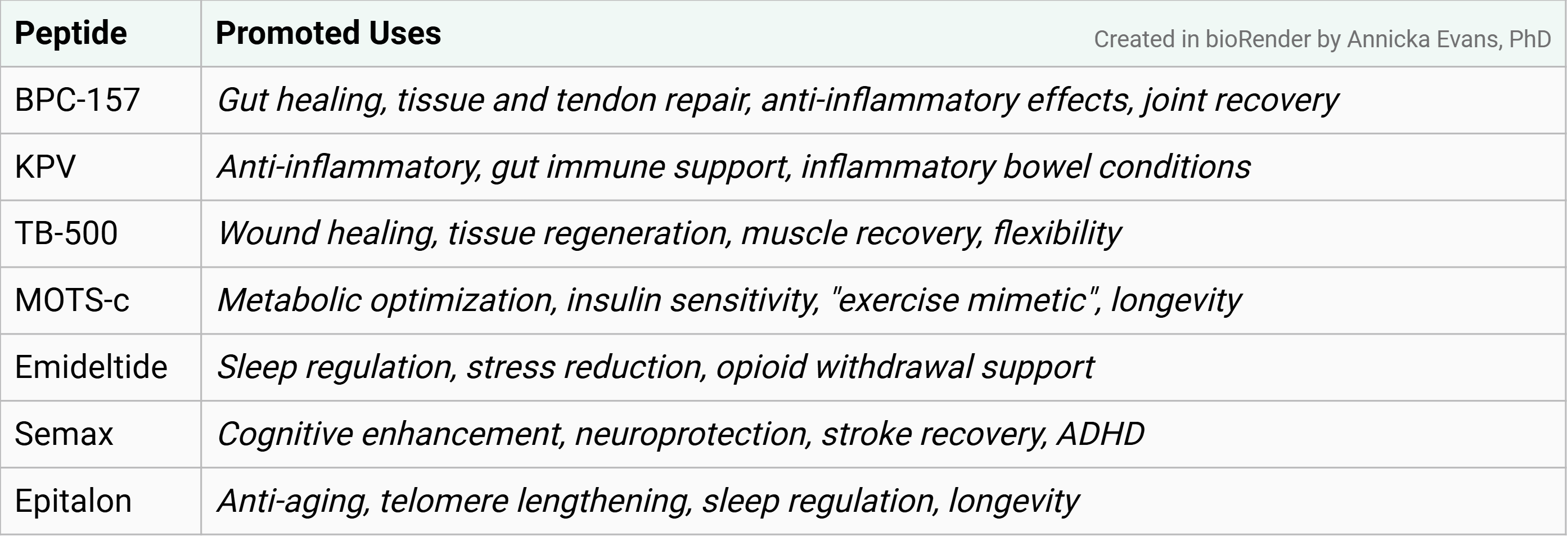
The PCAC is responsible for evaluating the 503A Bulk Drug Substance List which determines which ingredients compounding pharmacies can legally use. The July meeting is set to cover BPC-157, KPV, TB-500, MOTS-C, Emideltide (DSIP), Semax, and Epitalon.
When the announcement of the new members was made, it was met with a lot of concern for bias and lack of expertise (very reminiscent of the concern with the changes to the Advisory Committee for Immunization Practices or ACIP). Several of the members are known to sell or promote peptides.
Back in April we covered RFK Jr. openly hinting at his preference to make peptides more accessible, as well as the FDA announcement to reevaluate several Category 2 substances.

A few more sips: A reminder that none of the 7 peptides have FDA approval that provides a solid indication for use or proof of safety or efficacy. But below is a table summarizing what they are promoted for in the wellness space.
5. The Human Side
The Tea: As the FIFA World Cup is in full swing, this piece is a fun read. In this opinion piece in Nature Career Columns, Sarah Blackford, an academic career consultant, reflects on the similarities between early-career scientists and professional athletes.
“At the early-career stage, both professional footballers and academic researchers are driven by the kind of passion and talent that can demand sacrifices in home life, leisure and personal time. For players, this means long hours at the training ground dreaming of a winning goal in the national league or on the international stage. For researchers, it means hopes for a breakthrough discovery or highly cited paper.” - Sarah Blackford
Biotech Term of the Week
Paid Subscriber Bonus Content
Orphan Drug Designation (ODD)
