

🖊️A little favor (and a thank-you)! As the Biotech Tea grows, I’d love to learn more about who is reading! I’ve put together a quick, 3-question multiple choice survey to better understand this community, help shape the newsletter, and explore potential partnerships. Responses will only be used in aggregate. It should take you less than a minute! As a thank-you, anyone who completes the survey by Dec 6th will receive one month of complimentary paid access (two extra issues).
Let’s get into this week’s cup of biotech tea. ☕ If you only have time for one this week, I’d start with #1!
Zolgensma adverse tumors explained & summarized - what do we know? ➡️
A new engineered elastase to kill solid tumors & train the immune system ➡️
A heart-valve that can grow with the heart, reducing open-heart procedures ➡️
New preventative services task force members have conflicts of interest ➡️
George Church steps down as advisor, statement on ethical collaboration ➡️
1. Story I’m Watching
The Tea: Novartis just notified the FDA that they have seen 7 new adverse tumors in children who received their 2019 approved spinal muscular atrophy (SMA) gene therapy — Zolgensma. The therapy is designed to equip cells with a long-lasting protein blueprint that lives separate from the genome, but the small risk of it integrating into the genome does exist and can lead to tumorgenicity (which Novartis has not hidden).
So what do we know? The FDA has announced it has launched an investigation and the EMA has released a statement asking Novartis to be more communicative about what they do and don’t know. I took some time to put a figure + table together of the 9 total tumors, what we know, and what we don’t.
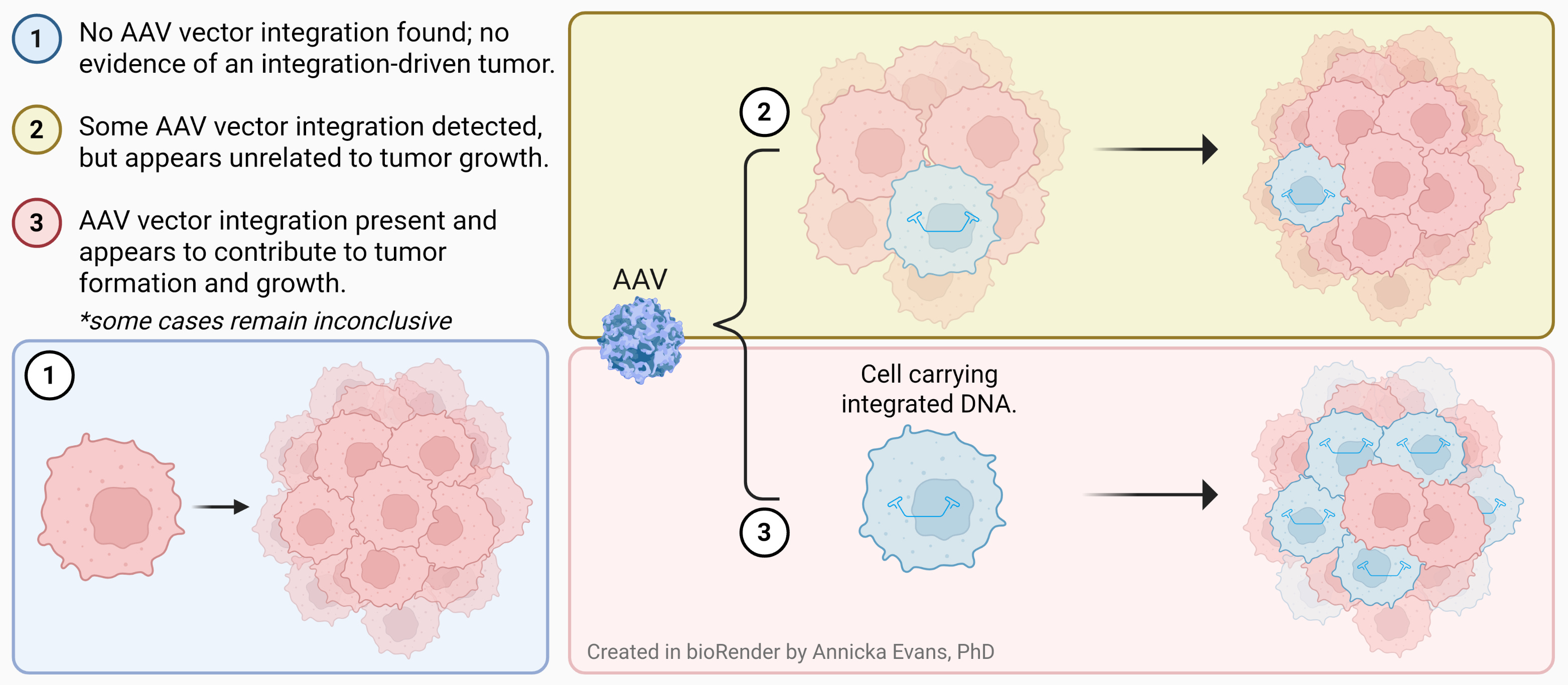
A few more sips: SMA is a rare genetic disease that causes degenerative muscle weakness and atrophy. Zolgensma, approved for children under 2, is an AAV vector that carries a working copy of the SMN gene, which is mutated and nonfunctional in people with the inherited disease.
Since its approval, the therapy has seen incredible success in helping improve quality of life in children under 2. It has also had it’s fair share of hurdles. First with reports of severe liver toxicity. Then in 2023 and 2025 with reports of the first tumors. And now this week, with the announcement of 7 more tumors found. This is the burden of advanced therapeutics development and its regulation - it will be interesting to see how the risk benefit analysis plays out.
2. From the Bench
The Tea: Onchilles Pharma just released promising early clinical data in solid tumors using it’s engineered elastase, N17350, which mimics a specific neutrophil cancer-killing pathway called ELANE. The ELANE pathway, discovered by Onchilles co-founder (published in 2021 in Cell), takes advantage of the elevated level of H1 histones in tumor cells. The therapeutic elastase injected in tumor cells cleaves off the ‘death domain’ of CD95, which, when combined with H1 histone, signals for cell death. Onchilles also hoped that the tumor apoptosis would train the immune system to attack other cancerous tissue throughout the body.
The Phase 1/2 dosing and efficacy study (OP-NEU-101) is ongoing but they presented some early data this past week that indicated no safety concerns and some positive case studies. They specifically highlight a patient who had aggressive skin cancer that was resistant to treatment. N17350 was injected in 1 of 6 tumor sites and 8 weeks later the sites were undetectable, even the 5 that had not been directly injected. I am looking forward to seeing the trial results!
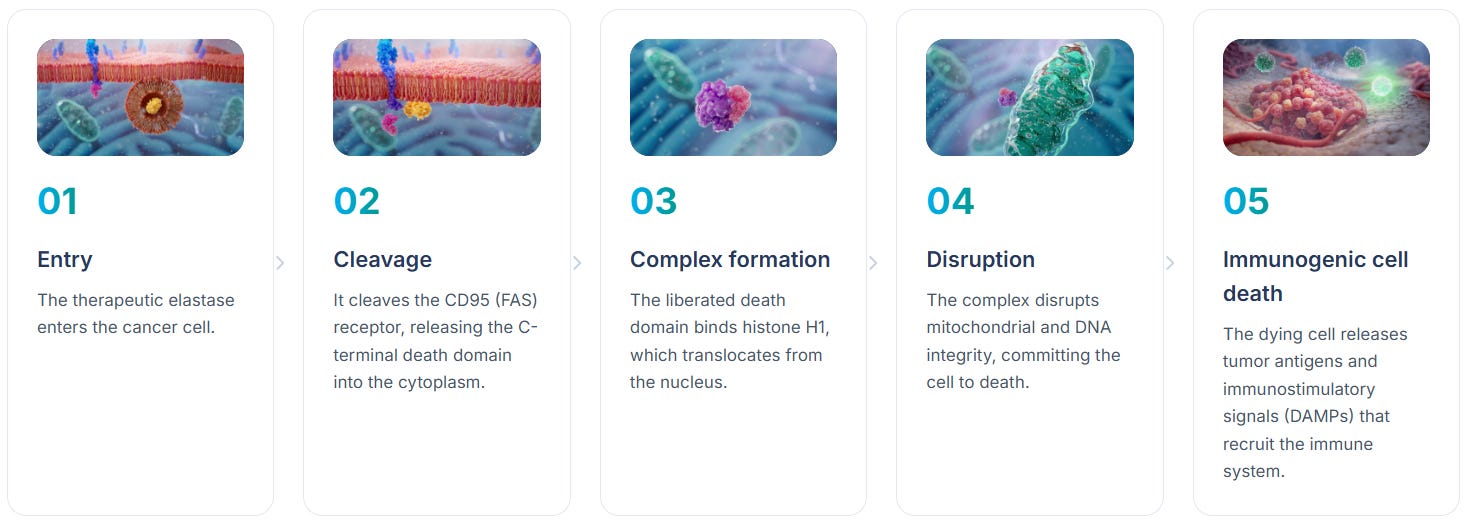
A few more sips: As we talk about regularly when it comes to cancer therapy, finding a way to target only cancer cells and not healthy ones is critical for safety (but also efficacy because every targeted healthy cell is wasted dose). N17350 is first-in class for targeting H1 histone as it’s mechanism for treating cancer.
Message me if you have a recent science development you’d like to see featured!
3. Bio[Tech]
The Tea: Have you ever thought about what children born with pulminary valve disease (PVD) have to do when they outgrow their artificial valve? The FDA just approved the AUTUS size-adjustable pulmonary valve, a device that has the ability to be enlarged with a balloon catheter procedure to grow with the heart. Currently, doctors and parents make the decision to either wait to place one until the child’s heart has grown nearer to adult size or to have multiple open-heart surgeries to place new, size-appropriate, ones. The AUTUS, which was trialed in 50 children ages 18 months to 16 years, saw no placement complications and saw good effectiveness + no safety concerns out 6 months.
4. The Rulebook
The Tea: Four newly appointed members of the United States Preventative Services Task Force (USPSTF) have conflicts of interests (COIs) being “waivered-away”.
Earlier this fall eight new members were added to the task force responsible for discussing preventative care practices. The expertise of the the new members shifted the USPSTF away from primary-care and more toward specialists.
The New York Times reviewed documents that appeared to allow some of the members to retain stock in companies that make drugs or products connected to decisions the group may make. Typically, conflicts of interest must be disclosed by committee or task force members, and significant ones result in an abstained vote or removal. It will be interesting to see what decision is made here.

5. The Human Side
The Tea: Famous synthetic biology scientist, George Church, stepped down as advisor for biotech startup Radical Numerics after noting uncollaborative behavior. From what we know, Radical partnered with Tabula Biosciences on a novel phage therapy for treating bacteria. But in a recent technical report, Radical didn’t mention Tabula or credit any of their work.
In an interview with Endpoint News Church said:
“I’ve never seen anything like it. It’s the kind of cutthroat mentality you see in Hollywood.”
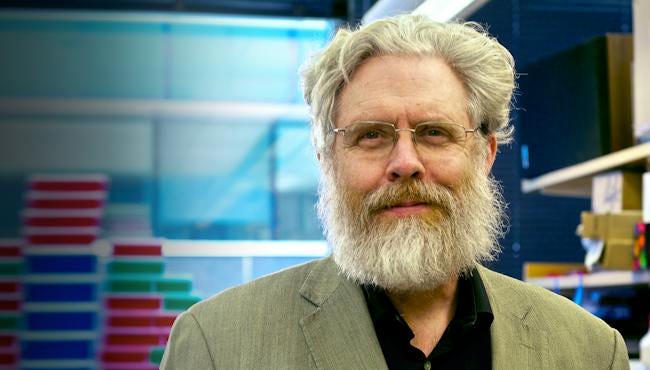
Since Church’s exist Radical has made a statement clarifying Tabula’s important role in the work and said the report didn’t mention them because the partnership was still confidential. Beyond the details of this case, the bold exit makes a statement about the importance of ethical scientific collaboration.
