

In less than a month, 220 of you have made this a part of your weekly routine, and I am really motivated by that.
Let’s get into this week’s cup of biotech tea.☕ If you only have time for one this week, I’d start with #2!
P.S. Just click on the arrow, and you’ll jump to the section.
Pfizer Lyme vaccine misses the mark but is applying anyway ➡️
Semen-derived exosomes may have edge in ocular delivery ➡️
Microneedle patch technology pivots to GLP-1 delivery ➡️
The NIH continues to push toward non-animal models ➡️
An Indian health influencer is demanding more GLP-1 data ➡️
Bonus (paid): different types of drugs and what that classification is called ➡️
1. Story I’m Watching
The Tea: Pfizer’s Lyme vaccine (LB6V) narrowly missed its primary endpoint because there were too few Lyme cases but they are preparing to submit to the FDA anyway!
Despite enrolling thousands of patients in the VALOR study, the number of participants that developed Lyme disease was so low the confidence interval of the efficacy results went outside the predetermined passing range. Regardless, Pfizer has stated that they are preparing to seek approval, given how promising the results appeared to be. The vaccine was over 70% effective at reducing Lyme disease after 4 doses compared to placebo. I am particularly curious to see how CBER responds.
A few more sips:
LB6V is a 6-valent recombinant protein vaccine targeting the surface protein (OspA) of the bacteria responsible for Lyme disease, Borrelia burgdorferi. You may see it referred to as VLA15 - this was its original name when it was initially developed by Valneva. LYMErix was a vaccine available for Lyme disease in the 90s but was discontinued in 2002. LB6V covers 6 relevant bacteria strains while LYMErix only covered 1.
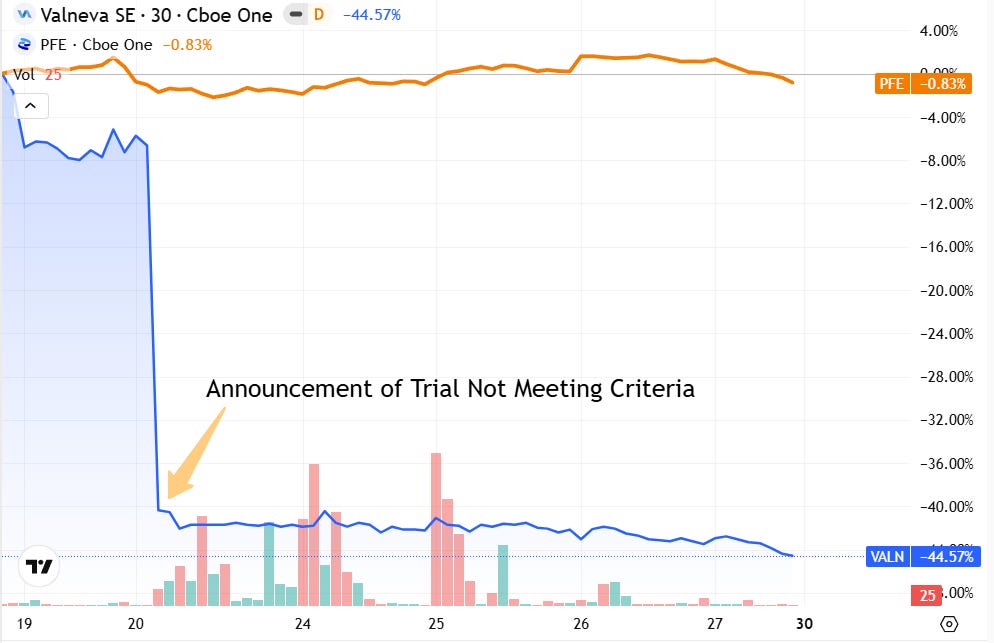
This took a big hit on Valneva’s stock while not doing much to Pfizer’s.
2. From the Bench
The Tea: Researchers in China recently discovered a potentially new, non-invasive way of delivering drugs to retinal cells (back of the eye). Get ready for it (it’s a little head tilting at first but stick with me). Zhao et. al wondered if the high penetration ability of sperm in a female reproductive tract could be translated to getting through the biologically complex back part of the eye (a known challenge in the field). Exosomes (lipid spheres) derived from pig semen (SEVs) were used to deliver a therapeutic payload to retinoblastoma cells through eye drops. The results were exciting. The SEVs were able to carefully navigate the tight-junctions (think narrow alleys between cells) of many of the ocular segments to deliver their payload without causing structural damage. This finding opens up the potential to further develop non-injection-based treatments for eye diseases!
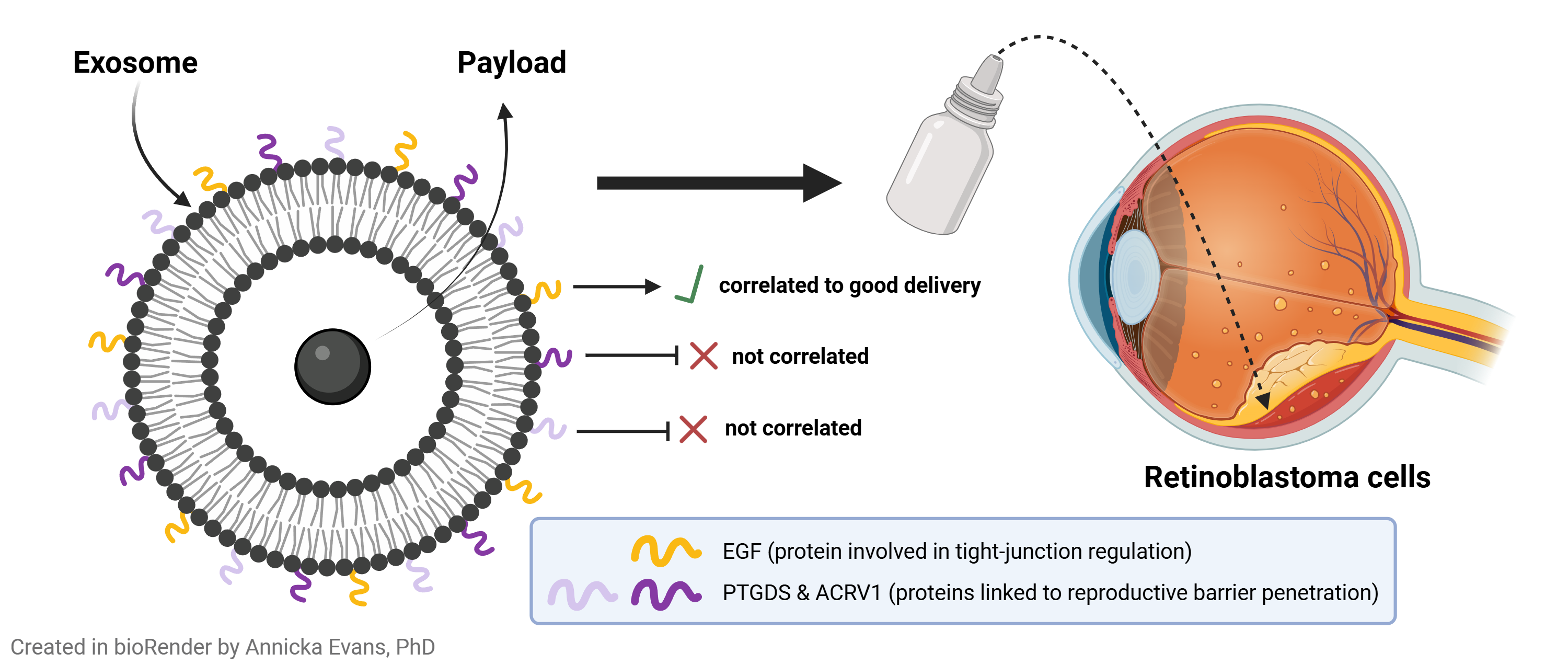
A few more sips: One of the most valuable findings from this research was the evaluation of the unique peptide signature of the SEVs. Future work in this space will rely on reverse-engineering these exosomes and optimizing them further. Through proteomics they specifically looked into proteins associated with reproductive barrier penetration (PTGDS and ACRV1) and tight-junction regulation (like EGFR). Interestingly they did NOT find that higher amounts of reproductive barrier proteins in the SEVs resulted in better delivery of the therapy. They DID find that endothelial growth factor (EGF) likely plays a role in the exosome successfully transporting to the back of the eye.
Message me if you have a recent science development you’d like to see featured!
3. Bio[Tech]
The Tea: A classic story of rejection followed by pick-yourself-off-the-floor success. A few years ago, a startup named Vaxxess partnered with AstraZeneca (AZ) to see if mRNA vaccines could be delivered with their novel microneedle patch technology platform. AZ ended their partnership with Vaxxess last year. But instead of giving up, Vaxxess pivoted. They renamed themselves Terrestrial Bio and just got $50mil in Series C funding to deliver GLP-1s using their platform. First up? A Phase I trial to deliver Semaglutide through the patch, eliminating the less-than-ideal routine injection patients have to endure when on this medication.
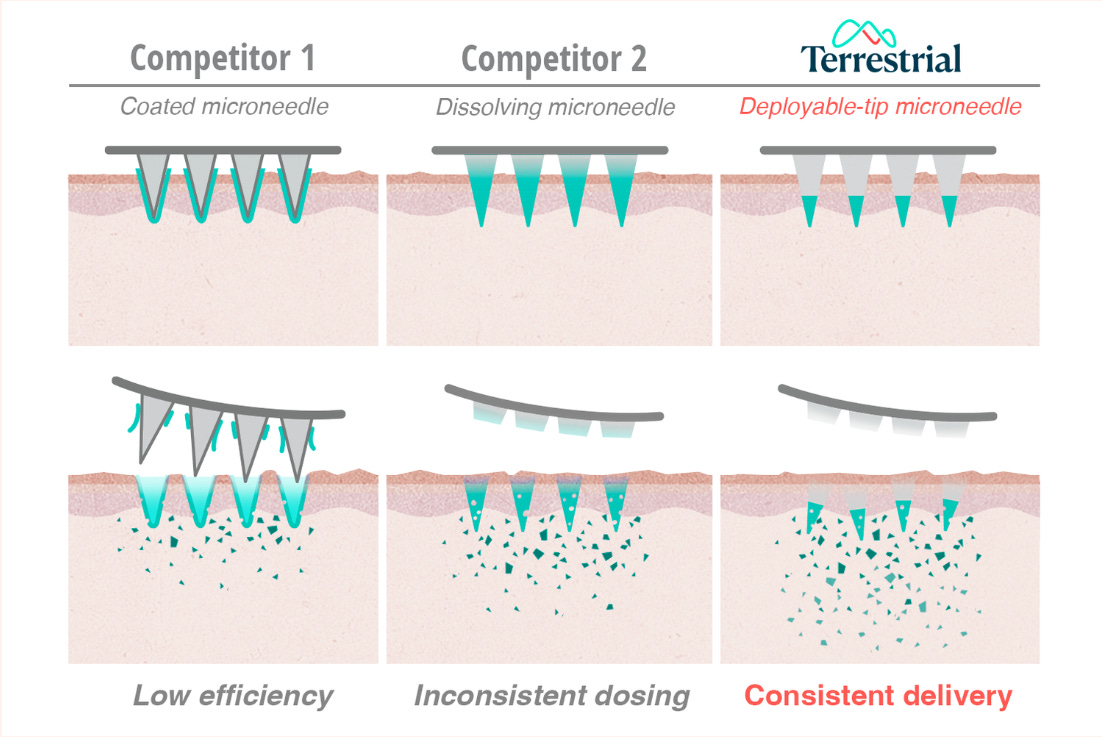
A few more sips: The microarray used in their patch is soluble, dissolving into the body after removal. The pig pre-clinical data that landed them the recent success demonstrated that bioavailability was comparable to subcutaneous injection and they were able to achieve a slightly higher max concentration. Can you imagine how much this could change the GLP-1 scene if it works well?
4. The Rulebook
The Tea: The NIH continues to emphasize that it wants animal models as much a thing of the past as possible. Both to improve clinical predictability (as we know animal models often fail to translate well to humans) and for ethical reasons. This month they announced that they have invested $150 million to labs across the country, toward the infrastructure of implementing New Approach Methodologies (NAMs).
A few more sips: I spent quite a bit of time clicking through the NIH and FNIH websites until I felt like I had a decent understanding of all that’s going on around NAMs right now. Here’s the general pipeline as far as I can tell:
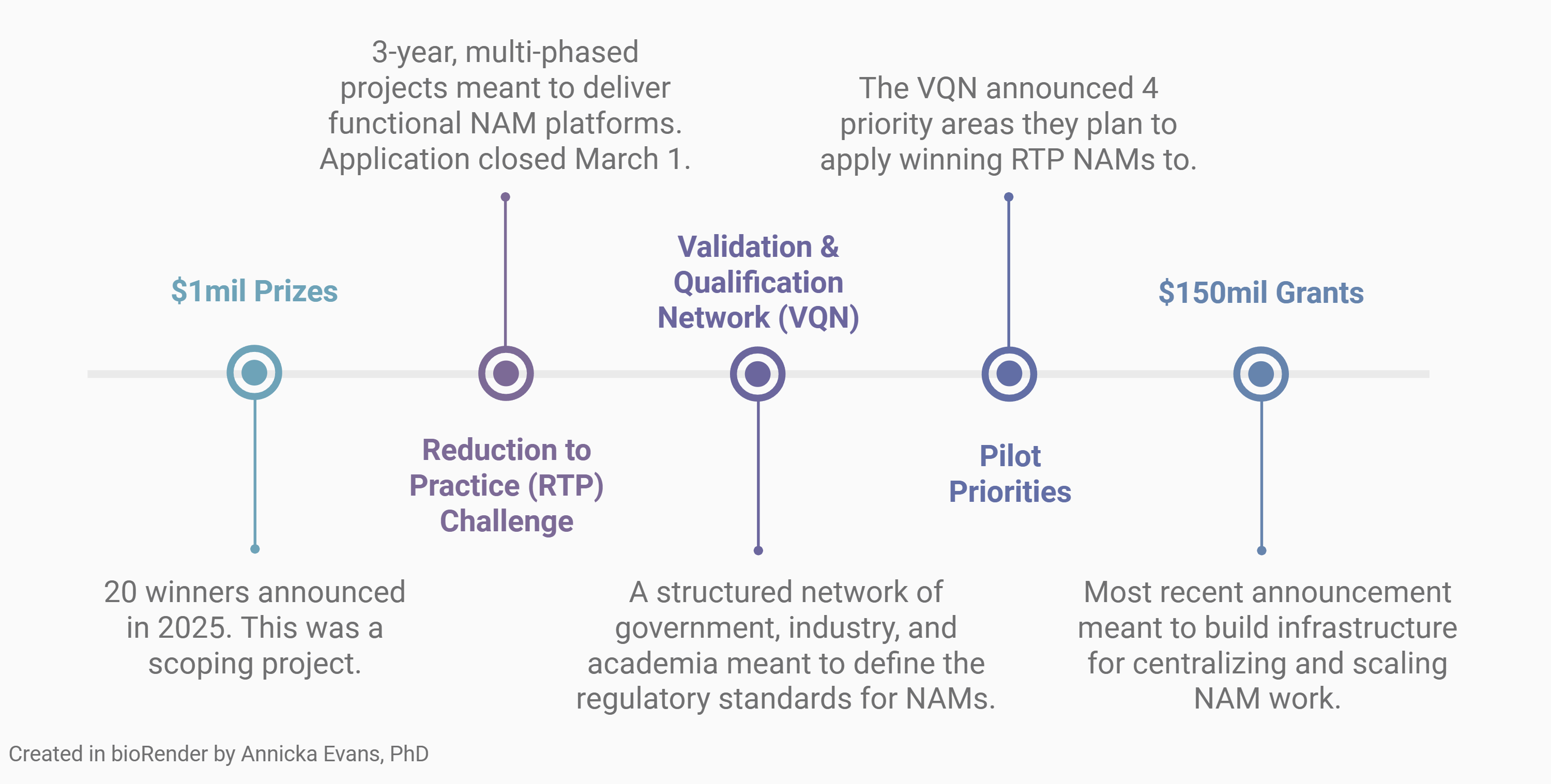
Keep an eye out for the announcement of the 3-year Reduction to Practice projects as well as efforts to define regulatory standards through the Validation & Qualification Network (VQN).
5. The Human Side
The Tea: Semaglutide just went-off patent in India and the country is about to be flooded with generics (estimates say 40 - 50)! If that wasn’t a recipe for disaster already, the BMI cut-off that the FDA set for using Semaglutide to reduce cardiovascular (CV) risk (BMI of 27) is too high for South Asian groups. But no Indian specific clinical data has been collected. An Indian health influencer and CEO/Founder of FITTR, Jitendra Chouksey, is demanding more from Indian Regulators and filed a court petition for more data last June.
“The drug patent in India has expired already and now GLP-1 drugs are 10-20x cheaper. No pharmacovigilance, no greivance redressal. What could possible go wrong? Best of luck to all the news channels, doctors, hospital formularies. Some serious money and damaged patients coming your way! 😇😀” - J. Chouksey

A few more sips: It is estimated that nearly half of at-risk Indian adults are below BMI 27. Compared to White populations, South and Southeast Asian populations accumulate visceral fat (increasing CV) younger and at lower BMIs. But the trial that set the BMI threshold, SELECT, enrolled over 10x more white participants than Asian. Indian regulators have not yet determined what their cut-off will be or if they plan to study it further. They are expected to respond to Jitendra’s concerns about the lack of Indian-specific clinical data at the Delhi High Court on May 21st. Diversity in trial design is critical for global markets.
Biotech Term of the Week
Helping you speak biotech.
Paid Subscriber Bonus Content (free to preview for a short time!)
Modality
non biotech synonym: type of a drug
A modality is the type of medicine used to treat disease. Each type has a unique biological mechanism and structure. Here are some examples:
Gene Therapies
Cell Therapies
Antibody Drug Conjugates
Small-molecules
Peptides
RNAi Therapies
Many companies focus in on one, or a handful. Each comes with it’s own unique challenges, manufacturing process, and analytical requirements (tests that need to be done to characterize and release the batches). As science advances, the list of modalities just continues to increase. Sometimes an entire new modality is added. Other times a modality splits into two (or more) as the mechanism becomes more specific and defined. An example of this is with antibodies:
Antibodies
monoclonal
bispecific
antibody-drug conjugates
nanobody
probody
…
