

The Biotech Tea made the Top Rising in Science at #41!!! Thank you all.
You’ll now see “The Tea” & “A few more sips” within each section. The first provides you the most important thing to know and the second a bit more detail if you’re interested!
Let’s get into this week’s biotech tea. ☕
1. Story I’m Watching
The Tea: The American Academy of Pediatrics (AAP) won a lawsuit against RFK Jr. reversing changes made to vaccine policy over the past year. A federal judge ruled that dismantling the original Advisory Committee on Immunization Practices (ACIP) and implementing new vaccine recommendations violated federal procedures.
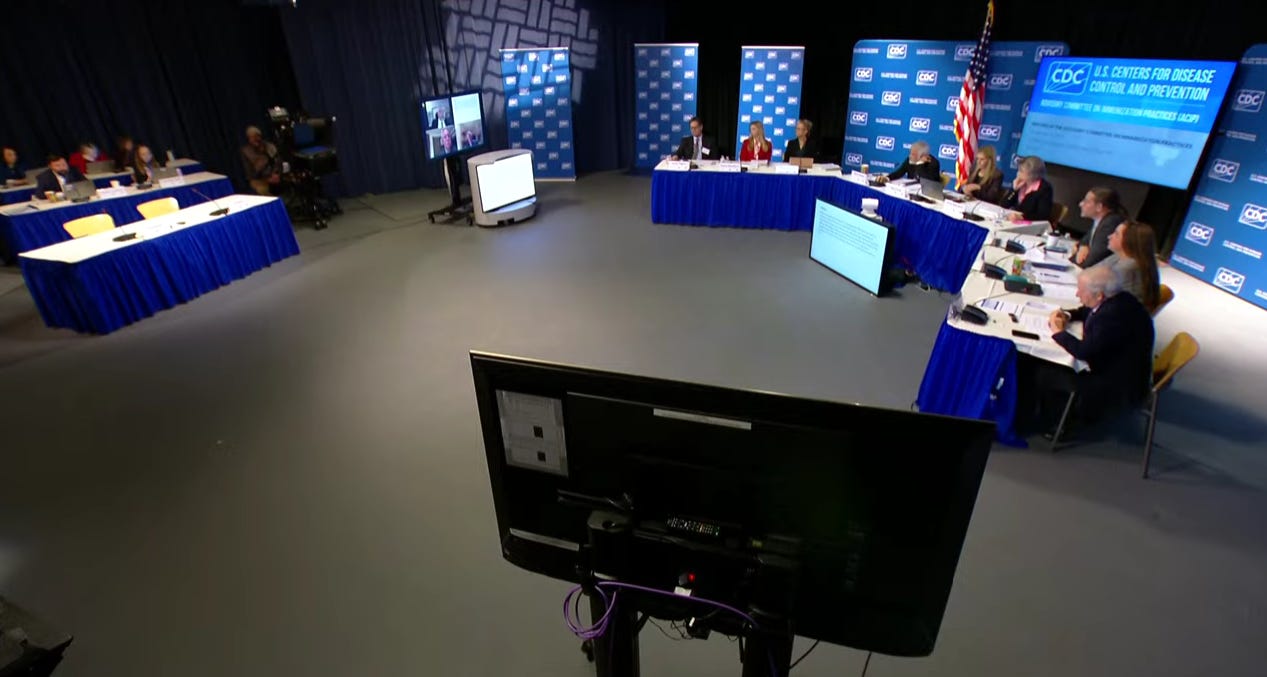
While ACIP doesn’t directly shape biotech development, the ruling reinforces that following established procedure is essential to credible outcomes. This is a win for science!
A few more sips: Here is a nutshell timeline of the ACIP changes over the last year.
June 2025: RFK Jr. replaces the ACIP committee with hand-picked members, raising concerns about anti-vaccine bias.
January 2026: Major changes to the child vaccine schedule are announced, reducing the number of diseases covered from 17 to 11.
March 2026: A federal judge rules in favor of the AAP lawsuit, reversing changes implemented since June 2025. You can listen to an interview with the lawyer behind the case here (conducted by Jeremy Faust, MD).
In the opening remarks, Judge Brian Murphy wrote:
“‘Science’, like law, ‘is far from a perfect instrument of knowledge’. - Carl Sagan. Nevertheless, science is still ‘the best we have’. ‘Procedure is to law what scientific method is to science.’”
2. From the Bench
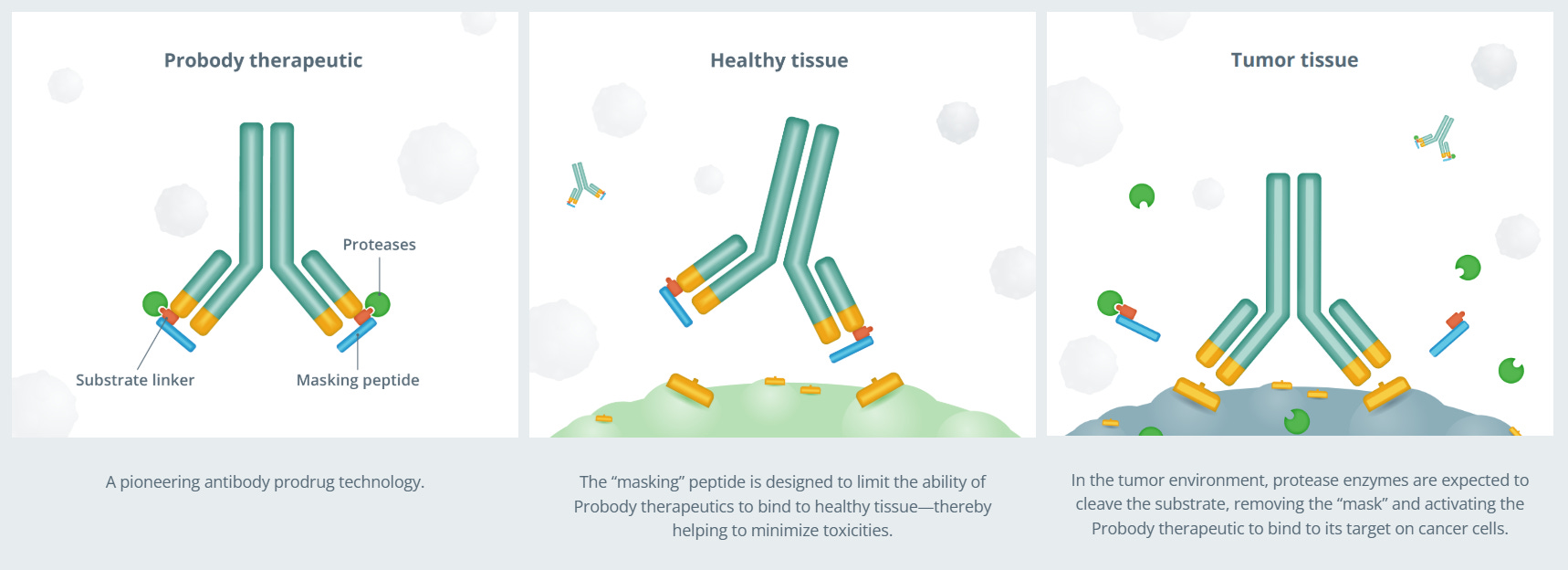
The Tea: CytomX announced positive Phase I data for Varseta-M, a “masked” antibody-drug conjugate (ADC) in the treatment of late-stage colorectal cancer. Unlike traditional ADCs, these “masked” ones are designed to only bind to tumors, not healthy tissues. This “Probody” technology takes advantage of high concentrations of proteases in a tumor microenvironment to “unmask” the binding domain. In the image below you see a masking peptide cleaved in the presence of protease enzymes in tumor tissue, activating it.
A few more sips: I audibly gasped when I saw this because yours truly did her PhD on protease-activatable AAV gene therapies for ovarian cancer! My advisor, Dr. Junghae Suh, built an entire wing of her research with the goal of engineering a protease-cleavable sequence into the capsid protein of AAV, such that it blocked cell-binding unless it was cleaved - rescuing binding! Clearly I’m biased, but I think this is such a fun bioengineering approach. But back to CytomX! They have an entire pipeline with this Probody technology. It includes ADCs, T-cell bispecifics, and cytokines. I will be keeping an eye on what they do.
Message me if you have a recent science development you’d like to see featured!
3. Bio[Tech]
The Tea: Eli Lilly and Nvidia recently announced LillyPod, the largest supercomputer owned and housed by a pharma company!
*I was happy to hear that they plan to fuel it with renewable energy!
LillyPod will be used for things like digital twin modeling (read more about that below) but also molecular discovery research (designing new drugs) using their massive internal datasets from decades of research.
Eli Lilly reported that the use of AI and digital twin technology resulted in big increases in GLP-1 production last year and they are making moves to stay on top.
“We literally made more product last year than we possibly could have without AI.” - Diogo Rau, Lilly’s CIDO

A few more sips: Have you heard of a digital twin? It’s a digital mirror of a process or product that runs simulations to optimize performance. Think Manufacturing Sims. With a digital twin scientists can test far more design conditions or process parameters than would be practical manually. The simulations don’t always perfectly match reality, but they can narrow down on promising directions. For Eli Lilly, it ended up being really useful.
4. The Rulebook
The Tea: The FDA released a new guidance document that will make it easier and cheaper to develop biosimilar drugs.
A biosimilar is like a generic, in concept. Both are “off-brand” versions of the brand-name drug (reference product) once it is no longer protected by its patent. The major difference is that a generic is the term for an “off-brand” chemically synthesized small-molecule drug (like acetaminophen), whereas a biosimilar is an “off-brand” living cell produced biological drug (like an antibody therapy).
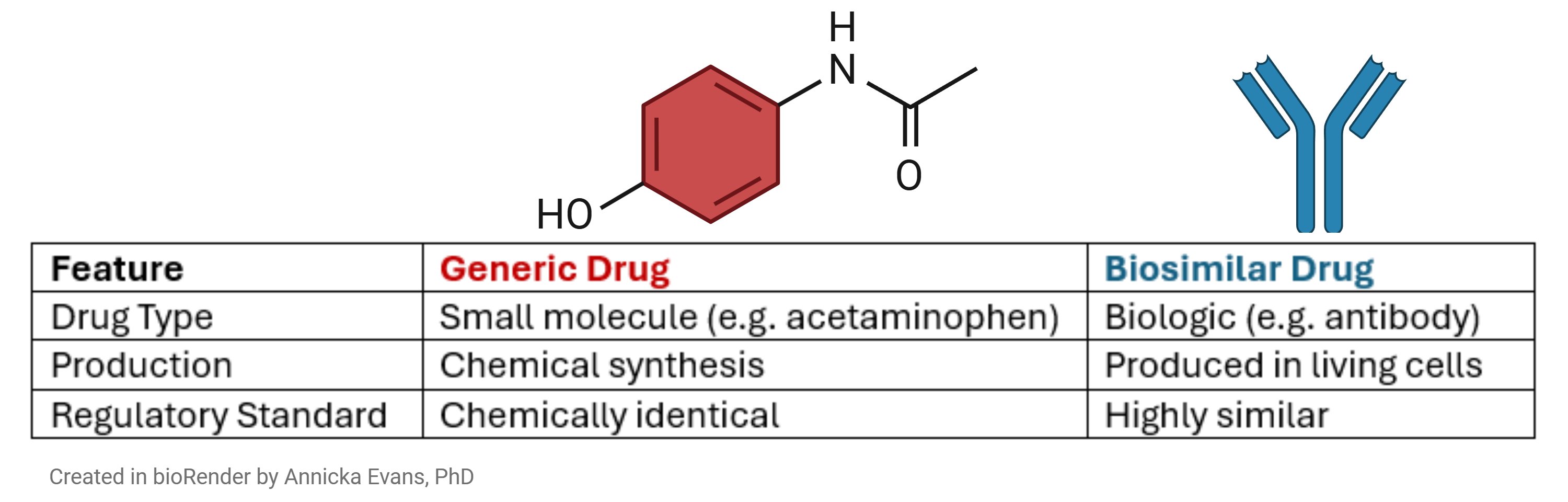
Biosimilars improve patient access by increasing options and potentially reducing cost. To date, 82 biosimilars have FDA approval.
A few more sips: The new Revision 4 guidance replaces the 2021 version. The update loosens requirements for the reference material that is used during development to allow the use of non-U.S.-licensed comparators without extensive bridging studies. For example, a company developing a Humira biosimilar could potentially use EU-authorized Humira in a study if they can analytically justify that it’s comparable. This update seems like a reasonable move to try and save time and money without sacrificing quality.
5. The Human Side
The Tea: In this thought-provoking piece, neurologist and medical ethicist Jason Karlawish uses surrealist art to help readers imagine what living with dementia might feel like. We all likely know or have known someone living with dementia or Alzheimer’s. The lessons learned from this article feel important to being able to step into their shoes.
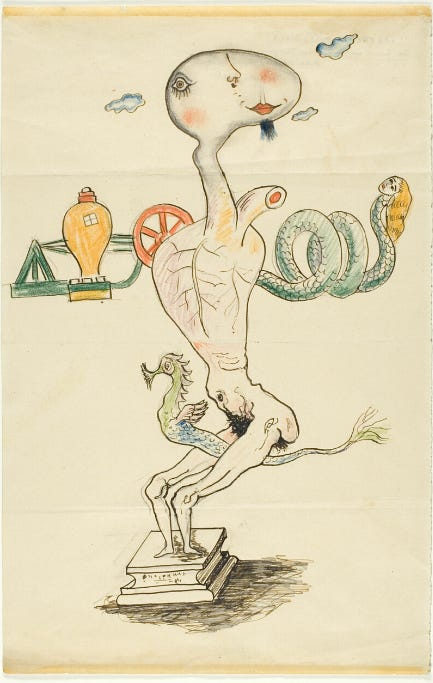
A few more sips: His opinion piece does a wonderful job giving examples of patient experiences and how parts of them might feel like one does looking at surrealist art. A piece like the collaborative drawing Exquisite Corpse (above) forces viewers to interpret strange, fragmented images that blur the boundary between the conscious and unconscious. Karlawish suggests this experience mirrors what many dementia patients describe: disorientation, hallucinations, and altered sensory perception that can make the world feel uncanny and frightening.
“Perhaps surrealism — because it helps us feel what it is like to live with dementia and offers clever, subversive ways to live creatively with it — might make living with dementia not so unpleasant.” - Jason Karlawish
Biotech Term of the Week
Paid Subscriber Bonus Content (for the first few installments it will be free to preview!)
Route of Administration
Non-biotech synonym: how a drug is delivered
Every drug candidate can potentially be developed for multiple diseases. That may mean that the active ingredients are the same but the dosing will likely change and so may the way it’s delivered to the patient. Here are some of the most common routes of administration:
Intravenous (think chemotherapy infusion)
Oral (think acetaminophen pill)
Intramuscular (think mRNA vaccine)
Inhalation (think asthma inhaler)
Transdermal (think nicotine patch)
Here are some less common routes of administration that can be used for delivery to particular tissues:
Intrathecal (into the cerebrospinal fluid)
Intravitreal (into the body of the eye)
Intratumoral (into a tumor mass)
Intracerebral (into brain tissue)
While we often think about the research and design of the drug itself, the way it is delivered can be equally important. If the drug doesn’t get to the part(s) of the body it needs to get to, it won’t be therapeutic.
