

The Biotech Tea is a quick, accessible rundown of biotech breakthroughs, policy shifts, and the science shaping the future of medicine. Each issue follows the same structure: five curated sections covering science, policy, technology, and the people behind new medicines—designed to keep you informed in a balanced way—plus a bonus Biotech Term of the Week for paid subscribers (free to preview for the next few weeks!).
So without further ado…
Story I’m Watching
What caught my attention this week.
A little piece of my soul lights up when I see a positive AAV gene therapy readout. I studied AAV in my PhD and spent the first few years in industry working on AAV clinical candidates. This week Ultragenyx announced positive Phase 3 data for it’s AAV8 gene therapy drug for the treatment of a rare metabolic disease, ornithine transcarbamylase (OTC) deficiency.
OTC is an enzyme that helps prevent ammonia buildup in the liver.

The early readout indicated a statistically significant reduction of plasma ammonia compared to placebo (18%, p = 0.018). The second primary endpoint, a reduction in treatment burden, will not readout until next year.
While not the point of the Phase 3 trial, there were no big safety concerns, in line with the good safety profile from the Phase 1 and 2 trials. This is exciting to see, because AAV gene therapies have had a rocky start in the last decade, often because of off-target safety concerns. I look forward to seeing the final results next year!
From the Bench
An exciting science update.
Have you heard of the the Sec61 complex? It’s an important translocation channel protein in the endoplasmic reticulum (ER) membrane that mediates key steps of the secretory pathway of produced proteins. The French biotech company, Enodia Therapeutics, as well as California based Kezar Life Sciences are exploring drugs that modulate Sec61 to try and reduce the production of disease-relevant proteins. Kezar has a broader pipeline while Enodia is more Sec61 focused.
The news this week? Enodia is acquiring Kezar’s preclinical Sec61 program for $1 million. The molecule, KZR-540, selectively blocks PD-1 (another well-known anti-PD1, though not an Sec61 modulator, is Keytruda).
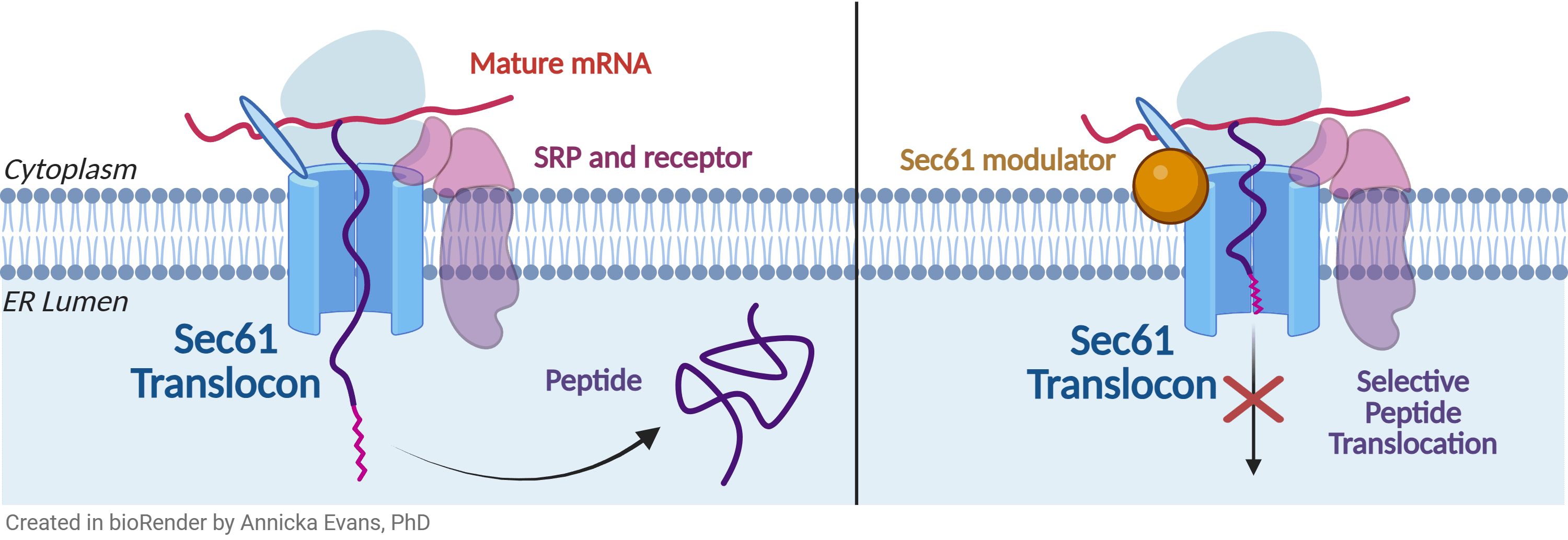
In January Enodia announced that they raised over $20 million to advance their work in this space with machine learning. It seems like the work to make these small molecule modulators specific to disease proteins may be possible but is very challenging.
Bio[Tech]
An advancement worth noting.
This news broke a little earlier this year but when I came across it again this week I knew I wanted to cover it. Doctronic, a New York based digital health startup, is running a pilot program in Utah to test a closed-loop AI agent that can independently refill patient prescriptions.

What is closed-loop? Think of it like a thermostat. Information is provided (temperature is read), decision is made (turn the heater on). Tools like CoPilot or ChatGPT are open-loop systems - they provide information but do not act on it.
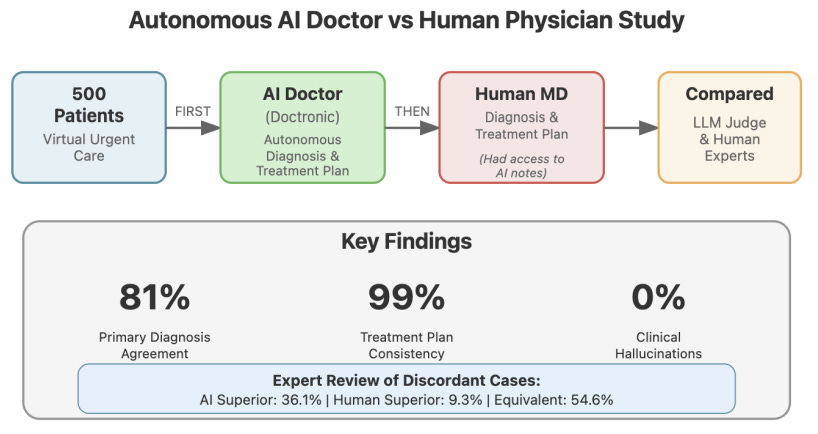
Closed-loop AI systems in healthcare are proceeding with a lot of caution but companies like Doctronic and UpDoc believe they are the way for AI to truly transform healthcare workflows. Doctronic, outside this pilot in Utah, provides AI consultations for patients since January 2025. In a pre-print they recently released they found that with an n=500, the AI bot diagnosis agreed with a clinician only 81% of the time while the treatment plan matched 99% of the time.
The Rulebook
An important standard or regulatory development.
The United States Pharmacopeia (USP) has been busy! They released
6 new Reference Standards (hm maybe this week’s biotech term of the week)
11 Analytical Reference Materials
and 46 Pharmaceutical Analytical Impurities.
What does this mean? Let’s start with a quick get-to-know-you of the USP. It’s a private, non-profit scientific organization that develops standards for companies to use to harmonize drug production. They develop both documents (recommendations) AND physical materials used as analytical controls with the goal of making drugs developed and tested in a more harmonized way. The idea is that consistency improves quality. Each new reference standard or impurity material helps analytical labs around the world confirm that medicines meet the same quality bar.

Importantly, the USP releases documents (recommendations) and material on a continuous basis. I want to draw attention to it so you better understand that standards like this exist for drug development.
The Human Side
A patient or scientist perspective worth highlighting.
Jenna Norton, is a health equity and public health scientist that has worked in the NIH as a program officer. She is currently on administrative leave.

In this opinion article, Jenna shares her experience being a whistleblower from within and encourages scientists to embrace activism. Last year she began speaking up internally about consequences to the cuts in funding and eventually moved to getting more public support. Did you hear about the Bethesda Declaration? It was an open letter organized by Jenna written to NIH Director Jay Bhattacharya. It was signed by hundreds of her colleagues as well as other non-NIH scientists, voicing concern.
“For about 80 years, most fields of science enjoyed bipartisan support, allowing scientists to cling to an “apolitical” fantasy. But the scientific community can no longer afford to avoid politics when science is under attack… Scientists can start to demonstrate authenticity by remaining resolute in our values: truth, accountability, freedom of ideas, open debate, transparency, and public good.” - Jenna Norton
Biotech Term of the Week
Helping you speak biotech.
Paid Subscriber Bonus Content (for the first few installments it will be free to preview!)
Reference Standard
non biotech synonym: calibration material
A reference standard, is a highly understood batch of drug that can be used to compare all other batches to. This is critical for maintaining consistency, and like discussed above (in The Rulebook), consistency improves quality. Some reference standards are manufactured by individual companies, some are created by the USP, and some are even made by the FDA.
An example you might find interesting: Labs at the FDA work to make large batches of the recommended Influenza antigens to use as important references for testing seasonal flu vaccine batches.
