

🌐 You may notice posts now direct to thebiotechtea.com ☕ Nothing changes on your end — just excited to have a home outside of Substack URLs.
Let’s get into this week’s cup of biotech tea. ☕ If you only have time for one this week, I’d start with #2!
A company quietly tapped by the govt for it’s Ebola antibody drug ➡️
A enzyme replacement therapy not reliant on the pig industry ➡️
First data in for the Doctronic prescription renewal pilot ➡️
The FDA released framework for post-market assessment of foods ➡️
The “academic sleuth” asks that scientists and journalists work together" ➡️
Bonus (paid): FDA Encouraging Innovation series framework ➡️
1. Story I’m Watching
The Tea: As the Bundibugyo ebolavirus (BDBV) outbreak in the DRC and Uganda continues, an experimental antibody treatment has been quietly tapped by the U.S. government for potential use. According to a spokesperson at the Department of Health and Human Services, a small San Diego company, Mapp Biopharmaceutical, “has shipped doses [of it’s experimental antibody treatment, MBP134] for potential use in high-risk individuals”.
Very little information is known about the quantity of drug shipped, the grade of the material (research or clinical), under what conditions doses would be administered, and if more research is underway as we speak.
A few more sips: MBP134 is listed in their pipeline as a pan-Ebolavirus anti-viral antibody treatment but developed for Sudan ebolavirus (SUDV). It’s a mixture of 2 antibodies that were discovered from a survivor of the historic Zaire ebolavirus (EBOV) outbreak in West Africa between 2014 and 2016. They showed — in ferrets and monkeys — that the antibodies could potentially neutralize EBOV, SUDV, and BDBV.
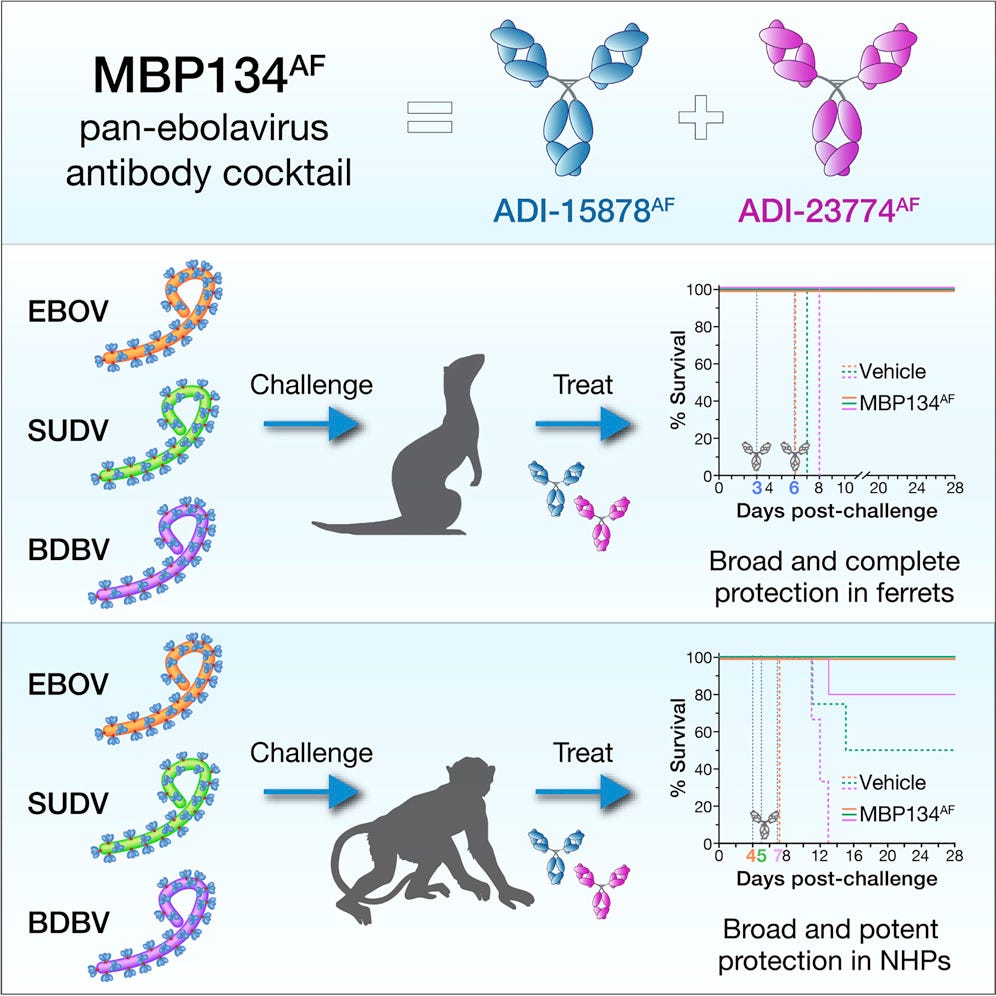
You can also read more about it in this week’s Binding Brief written by Madhuri Manohar, PhD!
2. From the Bench
The Tea: Many people who live with cystic fibrosis or pancreatic cancer have to take up to 40 (!) daily pills to deal with GI issues and poor nutrition absorption (known as exocrine pancreatic insufficiency). Pancreatic Enzyme Replacement Therapies (PERTs) may be used to introduce missing enzymes instead of taking pills, but current ones on the market are derived from pig pancreatic tissue (both an ethical and major supply chain problem).
Anagram Therapeutics is entering Phase 2 trials for a non-porcine PERT, ANG003, and Phase 1 results looked promising! This is a critical example of how drug development is holistic. You can’t just have a solid scientific basis if manufacturing runs into issues.
ANG003 contains 3 essential replacement enzymes:
Lipase for better absorbing fats
Protease for better absorbing proteins
& Amylase for better absorbing carbohydrates

A few more sips: It turns out that the reason for the supply chain issue is that the upstream agricultural market is actually shifting toward leaner pigs, which is a problem for the production of PERTs. Higher-fat pigs produce more enzyme. I think it’s really interesting to see a conflict between what’s needed for food vs drugs. The optimization target for one industry inadvertently constrained the other.
Message me if you have a recent science development you’d like to see featured!
3. Bio[Tech]
The Tea: Because we’ve covered this in previous issues, I wanted to follow-up! The first data report is in from the AI Doctronic Pilot Program that is renewing prescriptions in Utah.
So far, 72% of interactions resulted in a renewal (other 28% escalated to a physician). Of these, 91% had a result that agreed with the physician. In the mismatched 9% of interactions, the reviewing physician wanted more details or labs. When this happened, a second physician provided an opinion, and when you look at total number of cases that had a result agreeing with at least one physician, it was 97%!
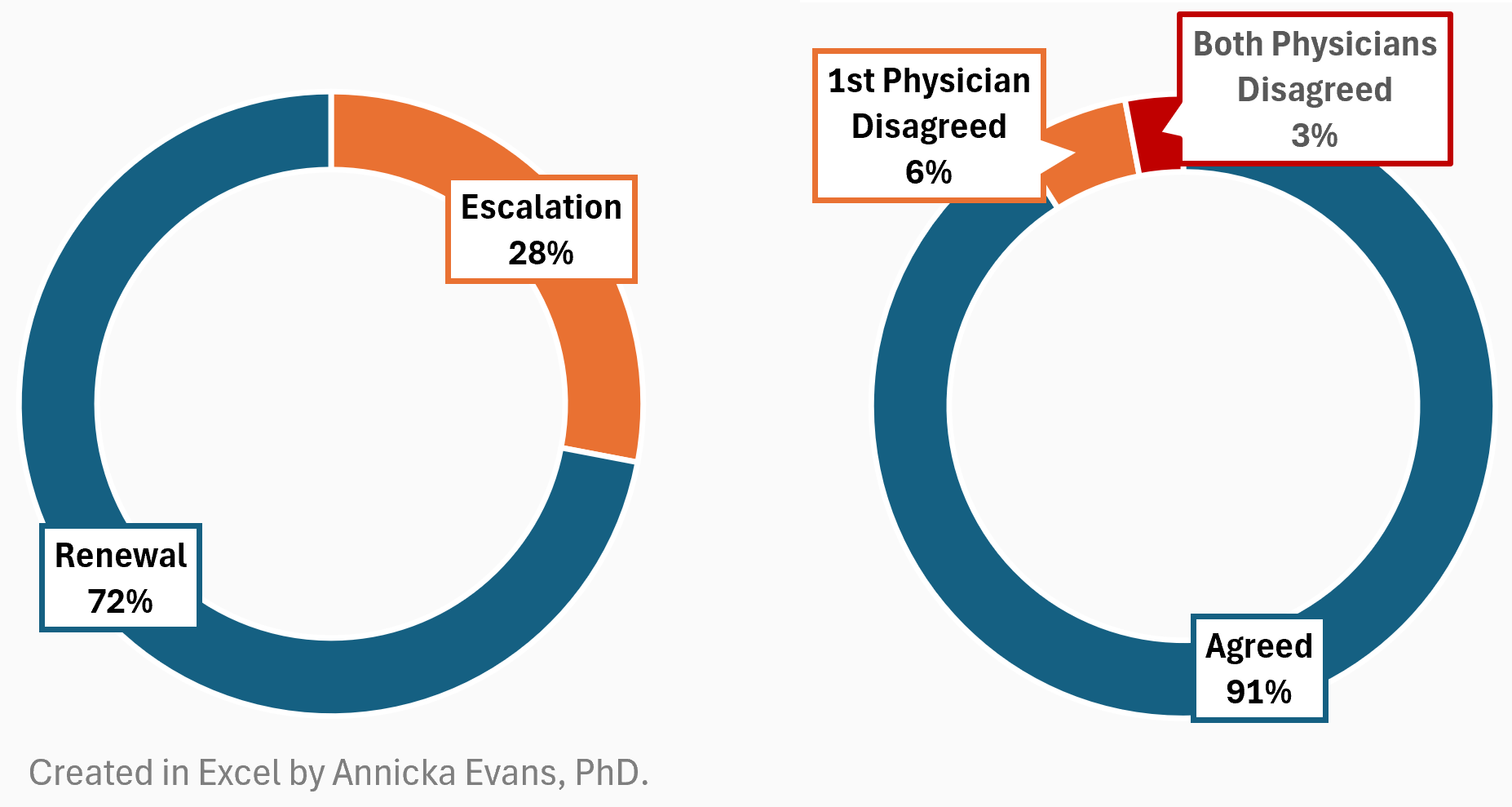
Interestingly, in the 28% that escalated to a physician, 31% of them the reviewing physician thought they were being overly cautious - but we can all agree that extra caution is better than too little in a pilot like this!
A few more sips: The Utah Medical Board has expressed concern, but the state Office of Artificial Intelligence Policy (OAIP) clarified that all the interactions with patients in this phase of the project are being reviewed by a physician before the prescription renewal takes place. They require 250 patients in each of nine different medication classes before moving onto the second phase of the pilot where a physician will review after the renewal.
4. The Rulebook
The Tea: Earlier this month the FDA released a framework for monitoring the safety of food chemicals and additives once they have been approved. This is on the tails of a 2024 discussion paper outlining what a more systematic process would look like and a 2025 tool released to help guide what should be reviewed. So what does this post-market assessment for food chemicals look like? It starts with signal detection (looking for any potential concern) and they will use several approaches including an AI platform called Warp Intelligent Learning EnginE (WILEE) that scans a plethora of sources. The food additive will then be triaged and prioritized for potential action based on sufficiency of evidence and level of public health concern.
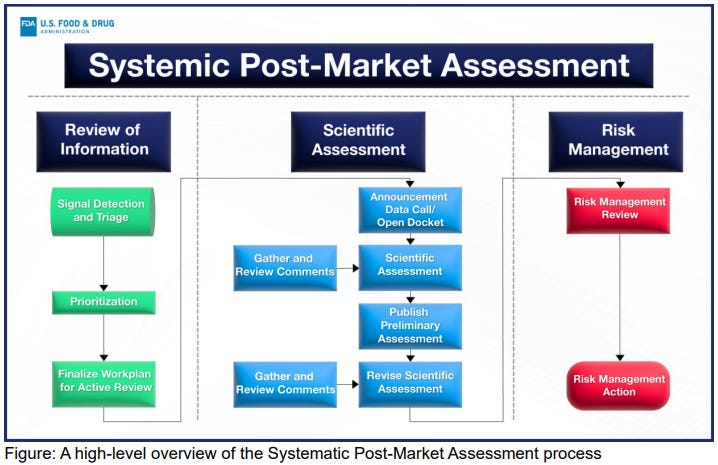
A few more sips: In the news release they also announced the first two additives being reassessed: butylated hydroxytoluene (BHT) and azodicarbonamide (ADA). BHT is an antioxidant used in fats and oils to increase shelf-life. ADA is a whitening agent and dough conditioner used in breadmaking.
5. The Human Side
The Tea: Lonni Besançon, an Assistant Professor of Visualization in Sweden, has become known as an “academic sleuth”, spending years investigating problematic work published during the pandemic and fighting for better and more transparent research practices. Earlier this month he wrote a column in Nature focusing on the importance of scientists and journalists garnering a much stronger relationship than what currently exists. In the column he shares a few words from when he spoke in a session at the World Conference of Science Journalists called ‘Cheats, sleuths, and journalists: How to cover misconduct in science’:
“In many cases, a journalist needs a lot more than a quick quote for an article that is more or less already written. Instead, they need involvement, critical feedback, context, suggestions of other papers to look at, deep analysis and more.” - Besançon

A few more sips: He, and other European researchers, have spent years trying to shine a light on the unethical research practices and lack of scientific rigor of one, Didier Raoult. While the concerns date back to the 2010s, he became prolific both in the media and in journals during the pandemic and is well known for his stance on hydroxychloroquine being an effective treatment against COVID-19. In 2024, their advocacy led to the retraction of 6 publications by the Raoult group.
Biotech Term of the Week
Paid Subscriber Bonus Content
Framework for FDA Encouraging Innovation
We’re building off the momentum of our FDA Expedited Program series to dive into other drug approval programs, incentives, or designations and how we can group them in ways that help us remember what they do.

